


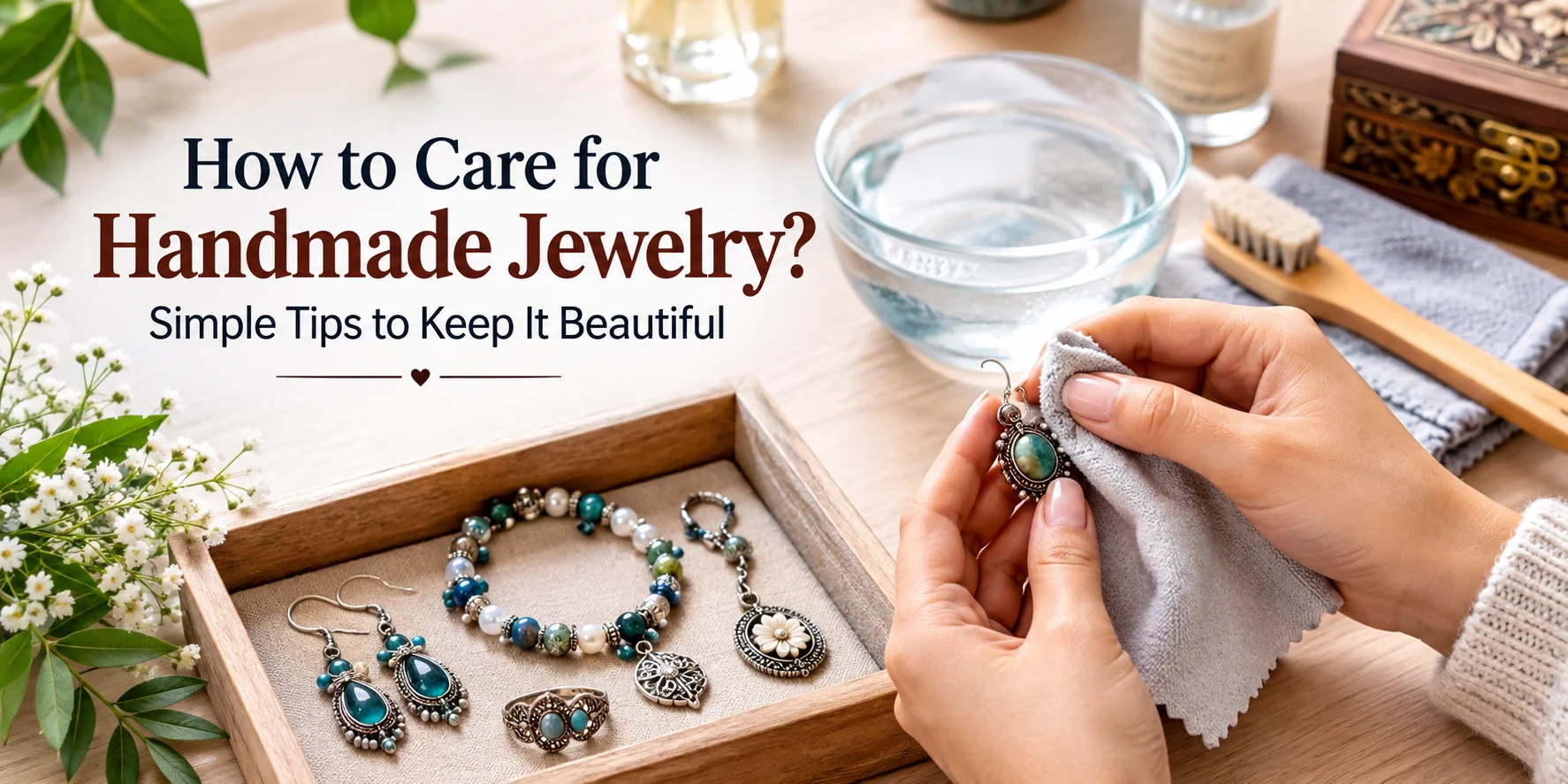
So I was at my friend’s place last month, right? And she pulls out this necklace her grandmother made years ago. Actually hand-stamped. Intricate work that took hours. And she just… grabs a regular polishing cloth and starts going at it. No water. Doesn’t even think about what metal it is. I was watching this happen and just thinking, oh no. When I told her that’s not how you do it, the look on her face was something else. Like, embarrassed? But also kind of defensive? Because honestly, how would she know. Most people don’t know the difference between caring for some mass-produced chain from Target versus an actual handmade piece. Like, genuinely. They figure jewelry is jewelry, you polish it or you don’t, end of story. It’s not. And that bugged me because her piece deserves better.
Look, handmade jewelry is different. It’s someone’s actual hours of work. Someone’s skill living on your wrist or neck. Not some factory thing where machines made a thousand of them. This is one person making one thing carefully. So yeah, it deserves actual care. Not complicated care. Just… actual care. I have this copper bracelet I bought in 2019 from a local market. The woman who made it was named Sarah, worked out of her apartment with barely any space, and I remember her showing me the details she’d hammered in. It was simple, but like, genuinely beautiful. I wore it everywhere. Showers. Gym. I even wore it doing yard work once, which was stupid. Within a year it looked kind of sad. Dinged up. Tarnish all over it unevenly. I still have it sitting in a drawer, but it’s not what it was. And I think about how if I’d just… known a few things. Basic things. It would still look nice. That’s why I’m actually writing this. Because it’s not hard. You don’t need some big routine. Just knowing a few things makes your pieces actually last.
What Makes Handmade Jewelry Different?
Okay, so here’s the thing about handmade jewelry that factory pieces don’t have to worry about. Every single component in a handmade piece matters. Like, actually matters in a specific way. When someone hand-crafted your necklace or ring or bracelet, they made intentional choices. They decided on metal thickness. They picked how beads would be strung—whether on thread, wire, or something else entirely. They chose what kind of clasp would work best for the design. They maybe soldered things together themselves, or used specific techniques to set stones. That’s not a flaw. That’s literally a feature. That’s what makes it handmade. But here’s where it gets tricky. What works fine for a mass-produced ring from a chain jewelry store might actually damage a handmade one. The metals might be different thicknesses. The soldering could be done by hand versus done by a machine. The finishes and this is important the finishes might be intentional.
Like, if you have a piece with oxidized silver, that dark grey or black finish? That’s not tarnish that happened by accident. That’s a design choice. The maker oxidized it on purpose because it looks beautiful that way. It’s the same with copper or bronze pieces that have a dark patina. That dark, rich color? That’s part of what you’re supposed to see. Most handmade jewelry makers use quality materials, but “quality” doesn’t mean “bulletproof.” It means it was chosen with intention. It might mean a delicate clasp that looks pretty but needs gentle handling. It might mean artisan wire wrapping that’s beautiful but more vulnerable to being bent the wrong way. It might mean stones set using traditional techniques that are absolutely gorgeous but not as secured as a factory prong setting would be. And that’s why understanding how to care for your handmade piece matters. It’s not just about keeping it clean. It’s about actually preserving what the maker created.
Why Proper Jewelry Care Matters
Let’s be real for a second. If you don’t take care of handmade jewelry, it won’t last like you want it to. A factory-made necklace might last five years before it breaks or needs replacing. A handmade piece? Could last fifty years. Could last a lifetime. Or it could tarnish unevenly, start to pit in weird ways, develop cracks, or lose those intentional details in two years if you’re rough with it. I get it. Jewelry is personal. You wear it. Sometimes you shower in it because you forgot it was there. You grab it quickly when you’re running late because you’re already late and nothing else matters in that moment. You wear it to places you probably shouldn’t because your life is complicated and you’re not thinking about your jewelry while you’re thinking about everything else.
Life happens. I’m not going to pretend it doesn’t. But here’s what actually kills me. The maker of your piece probably spent twenty, thirty, maybe fifty dollars just on materials. Then they spent hours assembling it. Hours. And they probably didn’t even charge that much for the finished piece. A little bit of care—and I genuinely mean little—changes whether that piece looks beautiful and lasts decades or whether it falls apart and looks sad in just a couple years.
Caring for your handmade jewelry is basically saying thank you to the person who made it. It’s saying, “I see the work you did. I respect it.” It’s also saying, “I want this thing I love to actually last.” Plus, you didn’t buy this jewelry just to watch it deteriorate. You bought it because you love how it looks. Or how it makes you feel when you wear it. Or because it reminds you of someone, or a moment. Protecting that is part of the whole deal. Taking care of something you care about isn’t complicated. It’s actually kind of the whole point of caring about something.
How to Clean Handmade Jewelry Safely
Okay, here’s where most people actually mess up. They think “clean” means you have to be aggressive about it. Scrubbing. Using something industrial. Going hard. It really doesn’t. And that’s the best part about this whole thing. For most handmade jewelry we’re talking silver, copper, bronze, gold-filled, most things really here’s the actual method that works: Warm water. Not hot. Not cold. Warm. The temperature you’d use to wash your hands gently. Mix in one tiny drop of mild dish soap. That’s it. One drop. You’re not making a whole soapy bath. You’re just adding a little help.
Get a small bowl or cup, mix it up, drop your jewelry in for about a minute. While it’s sitting there, you’re not doing anything. You’re just letting the water and soap work. After a minute, use your fingers or a soft cloth to gently wipe away any buildup. If there’s stuff you can’t reach, a soft toothbrush helps and I mean soft. The kind dentists recommend for actual teeth, not the one you use to aggressively clean your actual mouth. Let the brush do the work. Your hand doesn’t need to add pressure.
Then rinse it under running water. Gentle water pressure. You’re not power-washing a car. You’re rinsing jewelry. Then pat it dry with a soft cloth. Don’t let it air dry sitting on the counter. Pat it dry yourself. Make sure you get into any crevices where water could hide and cause problems later. That’s literally the whole thing. Start to finish, maybe three minutes.
Some people ask about those fancy jewelry cleaning solutions you can buy. They’re fine if you know exactly what metal your piece is made from and you know which solution won’t damage it. But honestly? For ninety percent of handmade jewelry situations, soap and water does the job without any guessing games. No machine vibrations that could shake a stone loose. No chemical surprises with weird interactions you didn’t expect.
I actually tried one of those ultrasonic cleaners once on a silver ring I have, and I was paranoid the whole time it was running. Just the sound of it made me worried something was getting damaged. With soap and water, you can watch what you’re doing. You have control. You’re not wondering if something bad is happening inside a machine you don’t fully understand.
What You Should Avoid When Cleaning Jewelry
Here’s a quick list of things that sound like they’d help but honestly shouldn’t be anywhere near your handmade jewelry:
Toothpaste. I know. Everyone says toothpaste cleans silver. And it does clean silver. It absolutely cleans tarnish right off. But here’s the thing most toothpastes are abrasive on purpose. That “fresh clean feeling” comes from tiny particles that are literally designed to scrub. Those particles destroy the polish on handmade work. They scratch it. They wear it down. Just skip this one. Your jewelry is not your teeth.
Chlorine bleach or any harsh chemicals. This one seems super obvious until it’s not. Chlorine eats through certain metals. It will absolutely ruin some finishes. If your handmade piece has an intentional patina or oxidized finish, bleach will strip it instantly. Gone. Not what you want at all.
Ultrasonic cleaners. Those little vibrating machines feel advanced. They feel scientific and clean-feeling. And technically, they can work on some pieces. But they can also loosen stones, damage delicate wire work, and shake apart pieces that weren’t designed for that kind of vibration. Most actual handmade jewelry makers will tell you straight up to avoid these. They understand their pieces, and they’re like, “don’t do this.” So don’t do it.
Rubbing or polishing too hard. Seriously. Gentle is the rule here. You are not scrubbing a pot. You are not cleaning a bathroom. You’re cleaning something that someone made by hand, literally with their hands and their tools in their studio. They didn’t make it to survive aggression.
Wearing it in a swimming pool or hot tub. Chlorine is rough on metal. Saltwater is rough on metal. Hot water in a tub opens up tiny gaps in metal and can cause expansion issues over time that add up. Seriously, just take it off first. Jewelry’s not going anywhere. You’ll put it back on when you’re dry.
I learned this the hard way because I used to wear this gold-filled bracelet in the hot tub and didn’t think about it. After a while, the connection between the two ends got a little loose, and I’m pretty sure it’s because of the temperature changes in that water. Now it catches on stuff sometimes. It’s my own fault for not thinking.
How to Protect Handmade Jewelry From Water and Moisture
Here’s something most people don’t actually think about. Water itself isn’t always the enemy. It’s what’s in the water that matters. And how often it’s exposed to it. Distilled water? Basically fine. You’re not going to hurt anything. Tap water? That’s got minerals and chemicals from the local water supply. They build up over time and can dull finishes or create weird spots. Saltwater? That actively damages certain metals. Chlorinated water? Same basic problem as saltwater. It’s corrosive.
Practically speaking? Just take your jewelry off before you shower, swim, or wash dishes. It takes five seconds to slip a ring off. Takes maybe thirty seconds to unhook a necklace. It takes literally no time. But it saves your piece from constant exposure to chemicals and minerals and whatever else is in the water. If you forget and your piece gets soaked because you will forget sometimes, life happens don’t panic. Rinse it gently in distilled water if you can, then pat it dry immediately with a soft cloth. Don’t let it air dry on the counter. Moisture sitting in crevices can cause problems.
And humidity. This is less dramatic but still worth knowing about. If you live somewhere that’s actually humid like, summer humidity or tropical climate humidity keep your jewelry in a cool, dry place. Moisture in the air speeds up tarnishing on certain metals. It’s like tarnish is waiting for a humid day to happen faster. If humidity’s a real thing where you live, keep silica gel packets or two in your jewelry storage box. You can get them cheap, and they help.
Keep Perfume, Lotion and Chemicals Away
This is actually one of the biggest reasons handmade jewelry deteriorates faster than it should, and a lot of people don’t even realize it’s happening. Put your jewelry on after you’re done with everything else. After perfume. After lotion. After sunscreen. All of those things contain chemicals that can interact with metal finishes and gemstones in ways you cannot predict without literally running experiments. I knew someone whose beautiful handmade gold-filled bracelet started to discolor in this weird way not normal tarnishing, but actual chemical reactions with the lotion she wore every single day. She only realized it months later what was happening. She could have completely avoided it by just waiting five minutes after applying lotion and then putting on her bracelet.
Perfume is particularly harsh on certain finishes. It’s alcohol and oils mixed together, and that combination can strip oxidized finishes or interact badly with gemstone coatings or resin details. Not every piece, not every time, but why risk it? That’s the thing. You don’t know unless you experiment, and I don’t recommend experimenting on something you care about. Same goes for hair spray, makeup products, nail polish remover anything chemical that you spray or apply near your neck and wrists. Just don’t wear your jewelry during that part of your routine. Take it off. Do your thing. Let everything dry. Then put it back on.
I know it sounds fussy when I explain it like this, but in actual practice it’s just a habit. Get dressed. Do your hair and makeup. Apply whatever products you apply. Then put your jewelry on last. You’re probably not adding more than thirty seconds to your routine, and you’re saving your pieces from chemical damage that you won’t even see happening until it’s too late.
The Best Way to Store Handmade Jewelry
Where you keep your jewelry when you’re not wearing it matters way more than people think. A drawer sitting in direct sunlight? Bad move. Sunlight fades and oxidizes certain metals faster. It’s not just about temperature. It’s about UV light literally changing the metal. If you have a necklace with a deep intentional patina or dark finish, keeping it in bright light will lighten it over time. You’ll lose that beautiful darkness. A bathroom drawer? Not great. Humidity from showers is constantly in that space. If you’re storing jewelry anywhere near a shower or sink, you’re basically inviting tarnishing to happen faster.
The winner is simple: a cool, dry, dark place. A jewelry box. A drawer far away from windows. A closet shelf. A shelf in a cabinet. Anywhere with stable temperature and humidity, and no direct light hitting it. Some people swear by those little soft cloth pouches that come with handmade pieces and honestly, those are usually good. They keep dust off and they keep pieces from tangling. If the piece came with a pouch or box from the maker, use it. That’s what it’s there for.
If you need something and you don’t have a fancy box, small sealed containers work fine. A plastic container with a lid. Even a clean plastic bag in a pinch, though it’s not ideal. The goal is just keeping things in a stable environment where they won’t get damaged accidentally. One pro tip that actually matters: if you’re storing multiple pieces together, keep them separated so they don’t scratch each other. Separate pouches. Different compartments. Whatever keeps them from direct contact with each other. Metal on metal equals scratches. Copper necklace touching a silver ring? They will leave marks on each other. It’s not dramatic, but it adds up.
How to Prevent Jewelry From Scratching or Tangling
Tangled chains are genuinely the worst. You reach for a necklace and find it twisted with three others, and suddenly you’re spending ten minutes trying to untangle it without yanking too hard and potentially breaking something. Easy fix: store longer pieces hanging. A small hook in your closet. A jewelry stand. Even a thumbtack in the wall if you’re renting and your landlord is cool about it. When chains hang vertically, they stay straight. They don’t tangle. Rings and earrings? Stack them or keep them in separate compartments.
For scratching: some metals like copper and certain golds scratch easier than stainless steel would. That’s normal and usually just cosmetic, but if you want to minimize it, just don’t let your pieces bang against each other constantly. Separate storage helps, or at least some padding. Bracelets that move around your wrist during the day? They naturally scratch against watch faces, door handles, whatever you touch. That’s not really avoidable completely. Some people actually like that worn look. It shows the piece has a life and has been loved. But if you want to minimize it, just be conscious about what your jewelry touches during the day. Nothing crazy, just awareness.
One real thing: don’t jangle your bracelets just because it sounds cool. I know the sound is satisfying. The clink clink clink when you move your wrist. But every single clink is metal hitting metal. Every impact is a tiny scratch or potential problem. Just be aware of it and gentle with your pieces.
Caring for Different Types of Handmade Jewelry
Not all handmade jewelry is made the same way or with the same materials. Care is different depending on what you have.
Silver jewelry. Tarnishes over time that’s totally normal and doesn’t mean you’re doing something wrong. It’s just chemistry. Silver oxidizes when exposed to air and moisture. We’ll get into fixing tarnish in a second. The basic care routine is simple: soap and warm water, dry immediately, store in a cool dry place. Silver is actually pretty hardy when you’re not aggressive with it.
Copper and bronze. These also tarnish and oxidize. But here’s the thing with a lot of handmade copper jewelry, the maker wanted that dark, rich color. That’s intentional. So if your copper piece is getting a greenish patina, that might not be a problem to solve. That might literally be the design. I’d email the maker if you’re not sure. It takes two minutes and they’ll tell you straight up whether that patina is supposed to be there.
Gold-filled or gold-plated. These have a layer of real gold over base metal underneath. They need gentleness because that gold layer can wear away if you’re aggressive with cleaning. Soap and water is actually perfect for these. No abrasive polishing cloths. No strong chemicals.
Gemstones. If your piece has stones whether they’re precious or semi-precious be extra careful. Some stones are porous and can absorb soap residue if you’re not careful. Some absolutely hate certain chemicals. Some can’t handle ultrasonic cleaning. If you’re not sure, a quick email to the maker costs nothing. They made it. They know their work inside and out. They’ll tell you exactly how to clean their specific piece.
Handmade wire-wrapped pieces. These are beautiful but can be delicate. The wire might loosen slightly if you’re too aggressive with cleaning. Gentle is especially key here. These aren’t made for scrubbing. They’re made to be beautiful.
Beaded pieces. If the beads are strung on thread or wire, don’t soak them for long periods. You’re not trying to loosen the whole thing. A quick dip in soapy water and immediate drying is the move. You’re cleaning the surface, not giving it a bath.
The honest truth: if your piece is unusual or uses materials you’re not familiar with, just ask the maker. They made it. They know exactly how to take care of it. Most handmade jewelry makers are genuinely thrilled when someone asks how to care for their work. It means the person actually values it. They didn’t just buy it and forget about it.
How Often Should You Clean Handmade Jewelry?
It depends. Depends on how much you’re actually wearing it.Daily wear? Maybe once a month or every six weeks. You’re not trying to make it sterile. You’re just removing dust, skin oils, and general buildup that accumulates from being on your body. That soap and water wash takes three minutes total.Occasional wear? Clean it before you put it on if it’s been in storage for a while. Just a quick rinse and dry. That’s it.
If it visibly needs it? Clean it then. That’s actually the real rule. You’re not on some strict schedule. You’re looking at the piece and thinking, “Yeah, that could use a wash.” Then you wash it.Don’t overthink this. You’re not maintaining a scientific instrument. You’re keeping jewelry nice by occasionally rinsing off the daily gunk that happens when you wear something. That’s literally it.
What to Do If Handmade Jewelry Starts to Tarnish
Okay, so here’s where things get slightly more complex, but honestly not even much. Tarnish is totally normal for silver, copper, and bronze. It’s oxidation. It’s chemistry happening. It doesn’t mean your jewelry is ruined. It doesn’t mean you did something wrong. It just means time passed and air happened.
For light tarnish, you can use a silver polishing cloth. You know those soft grey cloths? They have a special material in them that lifts tarnish without scratching. Usually. Just be gentle. Rub gently, and the tarnish comes off. Seriously. That’s the whole fix for light tarnish. Cloth and gentle rubbing. For heavier tarnish, you have a few options. The gentle option: baking soda paste. Mix baking soda with a tiny bit of water to make a paste. Rub it on gently with a soft cloth. Let it sit for a minute or two. Rinse and dry. It works surprisingly well and it’s not aggressive.
The stronger option: there are proper silver dips and tarnish removers you can buy. These are chemical baths that strip tarnish fast. They work, but they’re more intense than you probably need for minor tarnish. Follow the instructions exactly, don’t leave your jewelry in too long, and rinse well afterward. The thing I personally think is overrated? Those silver dip solutions. They work, sure, but they’re messy, they smell chemical-y, and they’re basically overkill for most situations. The baking soda paste gets you ninety percent of the way there and you already have baking soda at home for other things.
One important thing: if your handmade piece has an intentional patina a purposeful dark finish that’s part of the design don’t try to polish it away. That’s not tarnish. That’s the design. Check with the maker if you’re genuinely unsure what you’re looking at.
Simple Habits That Help Handmade Jewelry Last Longer
You don’t need some complicated care regime. You just need small things that become habits.
Take it off before bed. Jewelry gets twisted in sheets. You could bend it, break something, damage a stone. Sleep without it. Your wrists need a break anyway. It’s fine.
Put it on last in your morning routine. After everything else perfume, lotion, sunscreen, clothes. This one habit alone stops a lot of damage. Serious.
Don’t wear it to the gym. Sweat is corrosive over time, and you’re more likely to knock it against something or get it caught on equipment. Leave it at home or in your locker.
Check clasps and closures occasionally. If you have a bracelet with a clasp, gently try it every month or so. Make sure it’s still catching properly. A loose clasp means you could lose the whole piece. Tighten or adjust if needed, or ask the maker how to care for that specific closure.
Don’t let it sit in direct sunlight for hours. This is less about damage and more about preventing fading or unwanted oxidation of certain finishes.
Clean it gently and dry immediately. Not rocket science, but being thorough on the drying part actually matters. Water left sitting in crevices causes tarnishing faster.
That’s five habits. None of them take more than a few seconds to do.
When Is It Time to Have Your Jewelry Professionally Cleaned?
Sometimes you genuinely need an expert. If your piece has intricate details you can’t reach with a normal cloth, or if it has delicate stones, professional cleaning can be worth it. A jeweler has tools and knowledge you don’t. They probably have special solutions and equipment. They’ll do a better job than you can DIY. It’s also worth it if your piece has a clasp that’s loose, a stone that might need re-setting, or any actual structural damage. Don’t try to fix those things yourself. That’s when professionals earn their keep.
How often? Probably not often. Once a year, maybe, if you wear the same pieces constantly. Or whenever you notice actual damage or wear. Not on a schedule—just as needed. One thing: make sure you’re taking your piece to a jeweler who actually understands handmade jewelry. Some of those mall jewelry counters are basically assembly-line places. You want someone who actually understands artisan work. Ask the person who made your jewelry who they’d recommend for professional cleaning. They’ll steer you right.
Final Tips for Keeping Handmade Jewelry Beautiful
The thing about handmade jewelry is that it gets better with age if you treat it right. You’re not trying to keep it in a museum case, looking brand new forever under glass. You’re trying to keep it wearable and beautiful for years. For decades maybe. Some wear is okay. Some patina is okay. Some scratches? They tell a story. They show that you actually wear this thing. The point isn’t perfection—it’s longevity. It’s still looking good and feeling meaningful five years from now, ten years from now, maybe longer.
And honestly, if you mess up if you forget and wear it in the shower, or you polish away a finish by accident, or you let it sit in a humid bathroom for months it’s not the end. Most handmade jewelry can be restored by the maker. That’s one of the actual benefits of having a real person behind the work instead of a corporation. They can fix things. They can re-patina something if you accidentally polish it away. They understand the piece better than anyone else possibly could. Take a breath. Enjoy your jewelry. Wear it. Just be generally gentle with it. That’s the whole philosophy here. Simple. Not complicated. Just care.
FAQs
How do you take care of handmade jewelry?
The basics: take it off before showers, avoid chemicals like perfume and lotion, store it in a cool dry place, and clean it gently with warm soapy water about once a month. That covers ninety-five percent of what you need to know. Everything else is just details.
Can handmade jewelry get wet?
Water itself? Not really a problem. It’s what’s in the water that matters. Tap water has minerals. Chlorinated water damages certain metals. Saltwater is rough on most jewelry. So yes, it can get wet. But don’t do it regularly. Take it off during showers, pools, and ocean time.
How should I clean handmade jewelry at home?
Warm water with a drop of mild dish soap. Let it soak for a minute. Gently wipe with a soft cloth. Rinse under gentle running water. Dry immediately with a soft cloth. That’s the full routine. Takes three minutes.
Can I wear handmade jewelry every day?
Absolutely. Most handmade jewelry is literally made to be worn. Just be aware of what you’re doing. Don’t wear it to the gym. Take it off before showers. Try not to snag it on things. Daily wear is totally fine if you’re generally careful.
Why does handmade jewelry tarnish?
Metals like silver, copper, and bronze oxidize when exposed to air and moisture over time. It’s just chemistry. It doesn’t mean anything’s wrong. It’s completely normal and reversible with gentle cleaning.
How do you stop handmade jewelry from tarnishing?
You can’t fully prevent it, but you can slow it down. Store it in a cool, dry place away from humidity and light. Keep it away from chemicals and harsh environments. Use silica gel packets in storage if your climate is humid. But some tarnish over time is just normal and nothing to worry about.
Should handmade jewelry be stored in a box?
Doesn’t have to be fancy. Any cool, dry, dark storage works. A jewelry box is ideal. A drawer away from windows is fine. Some people use cloth pouches. Some use small containers. The point is keeping it protected, stable, and away from humidity and light.
Can perfume damage handmade jewelry?
Yes, potentially. Perfume is alcohol and oils. It can interact with certain metal finishes and gemstone coatings. Just put your jewelry on after perfume and lotion have dried. It takes thirty seconds of planning and saves your pieces.
How often should I clean my handmade jewelry?
If you wear it daily, maybe once a month. If you wear it occasionally, just clean it before you put it on or when you notice buildup. There’s no strict rule. You’re just removing dust and oils periodically. No rigid schedule needed.
How can I make handmade jewelry last longer?
Take it off before bed. Take it off before showers and the gym. Put it on last in your morning routine after everything else. Store it in a stable, cool, dry place. Check clasps occasionally. Clean it gently and dry it completely. That’s honestly most of it. Small consistent habits beat complicated routines every time.