


Three years ago I stood in front of my wardrobe for twenty minutes, late for work, surrounded by clothes, and still said the sentence everyone has said at least once: “I have nothing to wear.” It was the morning that finally pushed me to build a capsule wardrobe.
I had plenty to wear. That was the problem. Two rails packed tight, drawers that would not close properly, a chair in the corner doing what that chair always does. And almost none of it went with anything else. A bright printed top that only worked with one pair of trousers I no longer liked. Shoes bought for a wedding. Three almost-identical black jumpers because I kept forgetting I already owned one.
A friend looked at that mess and said, “You don’t have a clothes problem. You have a matching problem.”
She was right. And fixing it did not require spending a fortune. It required the opposite — owning less, but owning it on purpose. That is what a capsule wardrobe actually is, underneath all the tidy Instagram photos.
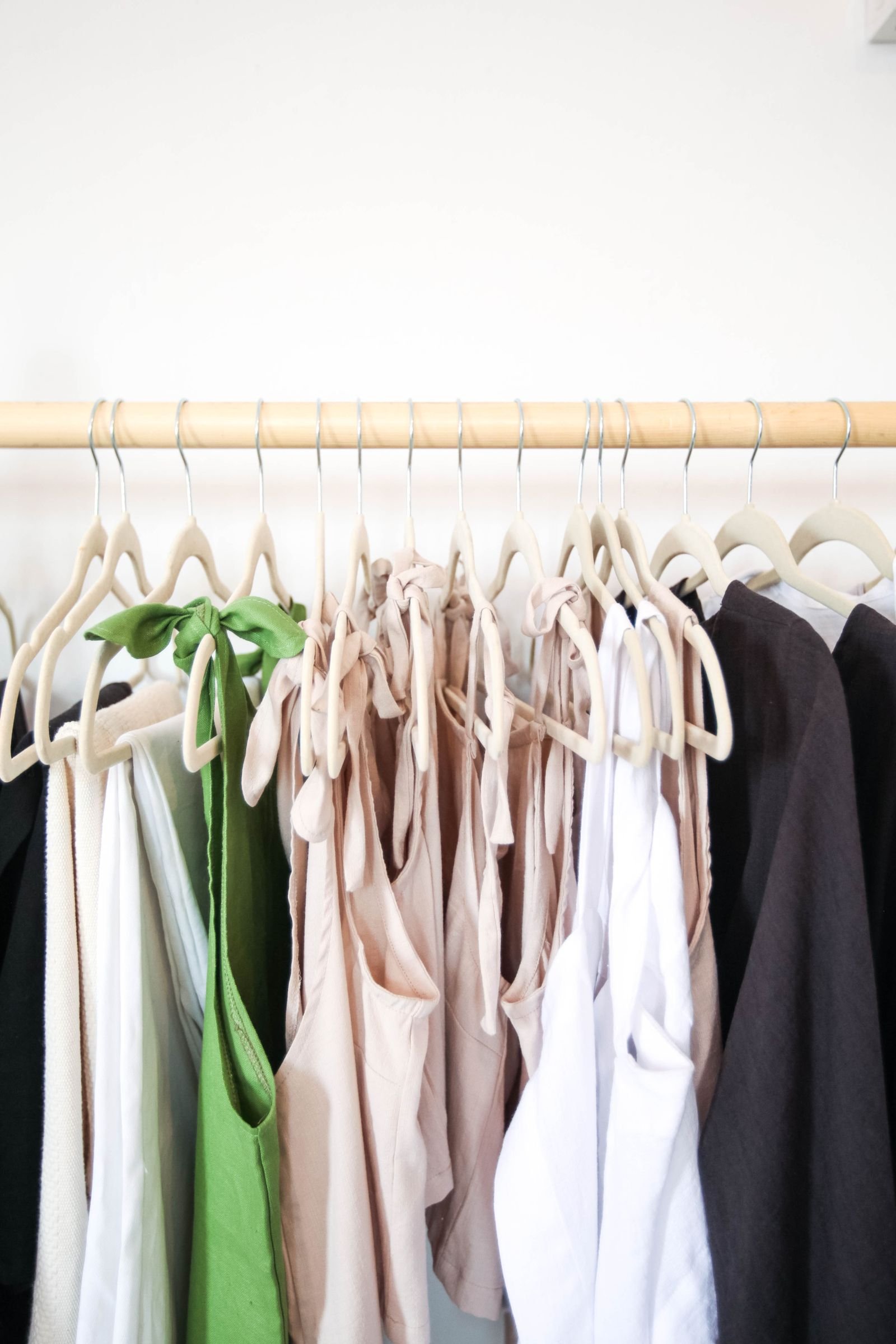
What a Capsule Wardrobe Actually Is
A capsule wardrobe is a small collection of clothes that all work together. Every top goes with most of the bottoms. Every layer works over most of the outfits. You can get dressed in the dark, half asleep, and still walk out looking like you meant it.
The classic version has around 30 to 37 pieces, including shoes. But the number is not the point, and anyone who treats it like a strict rule has missed why it works. The point is this: nothing in your wardrobe is an orphan.
An orphan is a piece that only works in one very specific outfit. Orphans are why wardrobes feel full and useless at the same time. A capsule wardrobe simply has no orphans — or very few, kept deliberately because you love them.
Start With What You Already Own (This Part Is Free)
Do not start by shopping. Starting by shopping is how people spend £300 and still have nothing to wear.
Start by pulling everything out. Yes, everything. Put it on the bed. It will look worse than you expected. That is normal, and honestly it is useful — you need to see the real picture, not the edited version you see when everything is hanging up and hiding.
Now sort into four piles:
- Wear it all the time. These are your proven pieces. They fit, you reach for them, you feel like yourself in them.
- Like it, but rarely wear it. Ask why. Wrong fit? Wrong colour for everything else you own? Needs a repair you keep postponing?
- Don’t like it anymore. Be honest. It does not matter what it cost. A £90 mistake takes up the same rail space as a £9 one.
- Doesn’t fit right now. Keep a small number if you genuinely think you will wear them again. Donate or sell the rest. A wardrobe full of “one day” clothes makes getting dressed feel like a guilt trip every morning.
Some “like it, but rarely wear it” pieces only need a rescue — a stain treated or a repair finally finished. For one of the toughest stains of all, here is how to get chewing gum out of clothes without ruining them.
What is left in pile one is the beginning of your capsule. Most people discover they already own 60 to 70 percent of a working capsule wardrobe. They just could not see it under all the other stuff.
Find Your Colours Before You Buy Anything
This is the step that makes everything else easy, and it costs nothing.
Look at your proven pile. You will see a pattern. Most people naturally return to two or three main colours — often navy, black, grey, white, or brown — plus one or two accent colours they actually enjoy wearing.
Write yours down. For a budget capsule, aim for:
- 2 base colours that go with everything (for example navy and grey, or black and brown — pick one family, warm or cool, and stick to it)
- 1 light neutral (white, cream, or light grey)
- 1 or 2 accent colours you love (mine are mustard and a dusty green — yours might be burgundy, cobalt, anything)
From now on, a new piece only comes home if it fits this palette. This single rule is what stops orphans from entering your wardrobe ever again. A beautiful top in a colour that matches nothing you own is not a bargain. It is a future donation with a price tag still on it.
The Core Pieces Worth Building Around
You do not need every item on every capsule list on the internet. Those lists are written for an imaginary person. Build around your actual life instead. But most working wardrobes, in most climates, end up needing some version of these:
Bottoms (pick 3–4)
- One pair of well-fitting jeans in a dark wash — dark jeans dress up and down better than any other single item
- One pair of neutral trousers or chinos
- One skirt or a second pair of trousers in your other base colour
- Optional: shorts or a lighter pair for summer
Tops (pick 5–7)
- Two plain t-shirts in your neutrals — plain, not printed, because plain layers under everything
- One white shirt or blouse — works with every bottom you own, every time
- Two tops in your accent colours
- One or two long-sleeved tops for layering and colder days
Layers (pick 2–3)
- One jumper or cardigan in a base colour
- One blazer, jacket, or structured layer that makes the plainest outfit look deliberate
- One proper coat for your climate
Dresses / one-piece outfits (optional, 1–2)
- If you wear them, one simple dress in a base colour is the fastest outfit in existence. If you don’t wear them, skip this entirely. A capsule built for someone else’s life will fail in yours.
Shoes (pick 3)
- One everyday pair (trainers or flats)
- One smarter pair for work or occasions
- One seasonal pair (boots in winter, sandals in summer)
That is roughly 20 to 25 pieces, and it can produce well over 50 different outfits because everything mixes. Fifty outfits from twenty-five pieces beats fifteen outfits from eighty pieces. That is the whole trick, and it is mostly maths, not fashion talent.
How to Fill the Gaps Without Wasting Money
Now — and only now — make a list of what is actually missing. Not what looks nice in a shop window. What is missing from your grid.
Then buy in this order:
- Buy second-hand first. Charity shops, Vinted, eBay, and local thrift stores are full of exactly the plain, good-quality basics a capsule needs, because basics are what everyone donates. A £6 second-hand wool jumper will outlast a £25 fast-fashion one. Check the fabric label before the price tag — natural fibres like cotton, wool, and linen generally last longer and look better after twenty washes.
- Set a cost-per-wear rule. A £60 pair of trousers you wear twice a week for two years costs about 29p per wear. A £15 pair you wear twice costs £7.50 per wear. The “expensive” pair is twenty-five times cheaper. Budget shopping is not about the lowest price. It is about the lowest price per actual use.
- Buy one piece at a time. The urge to “finish” the wardrobe in one shopping trip is where budgets die. One good piece a month builds a better wardrobe in six months than a panicked spree builds in a day — and you will make better choices because each new piece gets tested against everything you already own.
- Wait 48 hours on anything not on your list. If it is still on your mind after two days and it fits your colours and your grid, consider it. Most impulse buys do not survive 48 hours. That is the point.
The Boring Fear (And Why It Doesn’t Happen)
Everyone worries about the same thing before they start: “Won’t I look like I’m wearing the same outfit every day?”
Here is what actually happens. Nobody notices. People do not remember what you wore on Tuesday. They remember whether you generally looked put together or generally looked stressed in a changing-room panic outfit. A capsule wardrobe makes you look more consistent, not more repetitive — and consistency reads as style.
And when you do want variety, it comes from the cheap, small things: a scarf, different earrings, a belt, rolling the sleeves, tucking a top differently. Accessories are where personality lives, and they cost a fraction of a new outfit. Two people can own the exact same 25 pieces and look nothing alike. The capsule is the canvas. You are still the painting.
A Simple Test Before Every Purchase
Keep these three questions on your phone. Ask them in the shop, before the till:
- Does this go with at least three things I already own?
- Would I wear this at least 30 times?
- Would I still want it if it were full price and not on sale?
Three yeses: buy it. Any no: put it back. This takes ten seconds and it is, genuinely, the entire system. Everything else in this article is just explaining why those three questions work.
Start Small, Start This Week
Do not rebuild your whole wardrobe this weekend. Do the bed pile. Find your colours. Write the gap list. That is one hour, zero pounds, and it will already make Monday morning easier.
My wardrobe now has one rail instead of two, and I get dressed in about four minutes. Not because I became a more fashionable person. I didn’t. I just stopped owning clothes that were fighting each other, and started owning clothes that were on the same team.
Your wardrobe should work as a team too. It is a much smaller, cheaper team than you think.
That is the whole point of a capsule wardrobe: fewer, better pieces that all work together, bought slowly and worn constantly. When you need to fill a gap, second-hand marketplaces like Vinted are a good place to start. Start building your own capsule wardrobe this week — your mornings will thank you.