


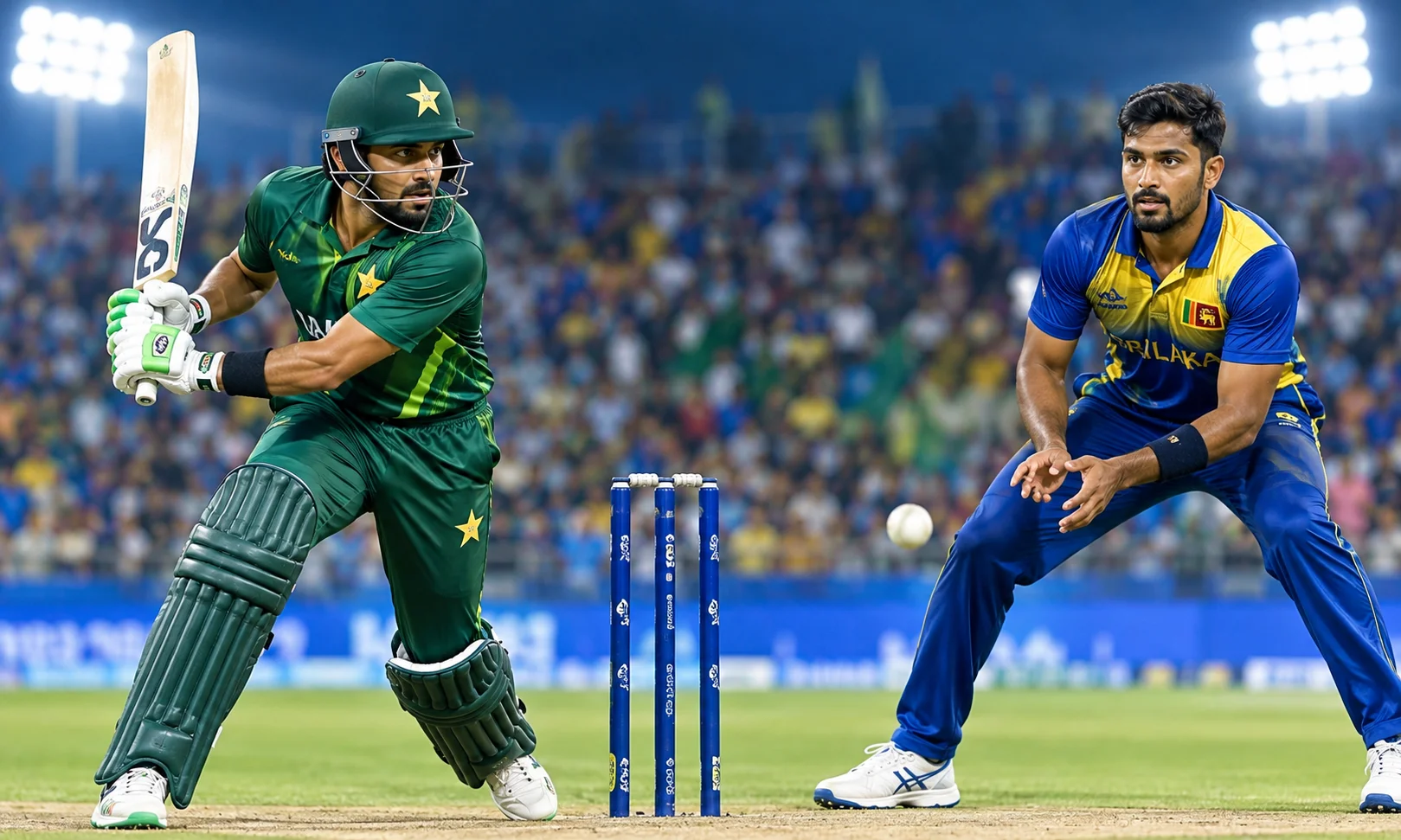
My phone was on 11 percent, plugged into the wobbly socket by the kitchen counter, and I was waiting for the kettle when I saw it. 110 all out. I actually refreshed twice. Thought it was an old scorecard stuck there. You know how apps do that. It wasn’t old. Pakistan, at home in Lahore, on 27 October 2026, had just been bowled out for 110 in 25.3 overs by Sri Lanka. Twenty-five overs. That’s not even half a one-day innings. Babar Azam top-scored with 29, the captain Shaheen Afridi hit a couple of sixes late on just to drag it past a hundred, and Dilshan Madushanka walked off with 5 for 34 like he’d been bowling on a different pitch to everyone else.
Kamindu Mendis then made 62 not out, Sri Lanka strolled to 114 for 2 in 18.1 overs, and done. Eight wickets in hand, 191 balls spare, match over before the chai was properly ready. Our WhatsApp group, which is never quiet, went dead for a good ten seconds. Then Asad, who only ever messages during collapses, sent one line:”Nobody answered him. Which was an answer, really. That’s the thing with Pakistan vs Sri Lanka cricket. It never stays in one mood for long. One week Pakistan look untouchable. The next week they can’t buy a run against left-arm pace. And Sri Lanka? They’re the same, just in a different colour. Brilliant one day, baffling the next, and weirdly comfortable when everyone writes them off before a big game.
If you’re new to this fixture, welcome. You’re not late. If you’ve watched it for twenty years, you already know the pattern, or, well, the lack of one. This isn’t a rivalry built on hate. It’s built on familiarity, on shared conditions, shared chaos, and a long list of matches that swung on one spell, one dropped catch, one batter who decided to stay calm while everyone around him lost their heads.
So look, I’ll do this the way I’d explain it if you were sat across from me and kept asking “but why does this keep happening?” We’ll do the history. We’ll do the Pakistan vs Sri Lanka stats, because you need them or none of the arguments make sense. And we’ll do the bits the stats miss completely Pakistan’s top order and its weekly drama, Sri Lanka producing yet another bowler who looks harmless in one series and takes five wickets in the next, all of that. The next big meeting is the tri-series final, 31 October 2026, Gaddafi Stadium. Keep that in the back of your mind while you read. Right. Cricket.
It doesn’t shout. Then suddenly it does.
Some rivalries are loud from a mile away. You know the ones. Cameras everywhere, thirty-year-old clips on repeat, men on TV arguing weeks before a ball is even bowled, my father saying “yeh sab drama hai” and then watching every minute anyway. PAK vs SL is quieter. Until it isn’t. They’ve been at this since the early eighties, when Sri Lanka were still finding their feet in Tests. World Cups, Asia Cup finals, five-day Tests in Karachi heat and Colombo humidity, plus those random bilateral series only the true sickos remember ball by ball. Compliment, that. I’m one of the sickos.
And they help each other in ways people forget. Sri Lanka toured Pakistan in 2019 when a lot of teams were still nervous about coming back. That tour mattered. It wasn’t just fixtures on a calendar. Fans in Lahore remember it. After what happened to the Sri Lankan team in Lahore in 2009, their return carried weight that a points table can’t show.
So yes, they compete hard. Sometimes it gets tense a send-off here, a stare there, a crowd that suddenly remembers an old final. But there’s respect under it, and it doesn’t need a press release or one of those forced handshake photos. It’s just… there. You can feel it in how the players talk about each other after. Here’s my small opinion, and I’ll stick to it: people underrate this fixture because neither team is consistent enough to sell a simple story. There’s no permanent favourite. Pakistan have the better overall record in ODIs and Tests. Sri Lanka have hurt Pakistan in finals more often than those records suggest. That’s a messier story. It’s also a truer one.
You can’t just say “Pakistan will win because the numbers say so.” The numbers say Pakistan should win more often. The finals say, hang on, not so fast. That tension is the whole point.
Pakistan vs Sri Lanka head to head only the numbers I actually use
Stats time. Sorry. I know, I know. Not the copy-paste kind, though, where someone dumps forty tables, smallest font in the world, and leaves you squinting at bowling averages from 1997. Just the ones I check myself before a series, plus a small warning: the databases don’t always update on the same day, so if you see a total that’s one match different somewhere else, that’s usually why. It drove me mad for an afternoon once. One site said this, one said that. Both were, in their own way, right one just hadn’t caught up yet.
Tests
Pakistan and Sri Lanka have played 59 Tests. Pakistan have won 23, Sri Lanka 17, and 19 finished as draws. That gap looks comfortable. It isn’t, really. A lot of those draws came on flat pitches where both sides piled up runs and the match died slowly on day five. The famous one is Karachi in 2009. Sri Lanka made 644 for 7 declared. Pakistan replied with 765 for 6 declared, still their highest Test total against Sri Lanka. Younis Khan made 313. Three hundred and thirteen. He batted so long that the scorebook started to feel like a novel.
And still, draw. Pakistan’s 2-0 win in Sri Lanka in 2023 was a proper statement, by the way winning in Galle and Colombo is never the shrug people pretend it is. Next up in Tests: November 2026, World Test Championship, Rawalpindi from the 9th to the 13th, Lahore from the 17th to the 21st. Dates in the diary. We’ll get back to them.
One Day Internationals
This is where they’ve met the most, and where Pakistan’s edge is clearest. After the match on 27 October 2026, the count sits at 161 ODIs. Pakistan 96 wins. Sri Lanka 60. One tie. Four no results.
Ninety-six to sixty is a real gap. Don’t let anyone talk you out of it. Over that many matches, it means Pakistan have, more often than not, had the stronger ODI side, better depth, or just handled the big moments in the middle overs better. But. And there’s always a but here.
Sri Lanka beat Pakistan in the 2022 Asia Cup final after falling to 58 for 5. They beat them in Lahore in that 110 all out game. They’ve made a habit of winning the match that gets remembered, even while losing more of the matches that don’t.
Twenty20 Internationals
T20Is are the tightest and the messiest to count, because the calendar keeps adding games. After the October 2026 T20 games in Rawalpindi Pakistan won the first two, Sri Lanka won the third most updated lists put it at 31 matches, Pakistan 18, Sri Lanka 13. Close. Scrappy. Very on brand. Babar, since you ask, leads the T20 run list in this fixture with 432. And Saeed Ajmal from a completely different cricket world, it feels like is still near the top of the wicket list. That alone tells you how long this thing has been running quietly in the background.
If you want it in one breath, for a quiz or an argument in a barber shop (mine gets heated, Rs 500 haircut and free cricket analysis whether you asked or not): Tests 23-17 to Pakistan with 19 draws, ODIs 96-60 to Pakistan, T20Is 18-13 to Pakistan. That’s the base. Tattoo it on your brain if you like. Anything you read about PAK vs SL that pretends those ratios don’t exist is selling you a mood, not a match and anything that pretends they’re the whole story is doing the same thing, just in the other direction.
The games people bring up without being asked
Every long fixture has, what, five or six games that do all the talking? Ask a fan to explain Pakistan vs Sri Lanka and nobody nobody starts with a spreadsheet. They start with a night. A final. A collapse they watched with their cousin in a room that was too hot.
Lord’s, 2009. The T20 World Cup final.
Pakistan beat Sri Lanka by eight wickets. Shahid Afridi made an unbeaten 54 and, for once, batted like a man in no hurry at all, which scared everyone more than his usual approach. Younis Khan lifted the trophy. For Pakistan fans, that summer still glows. The team had been through a rough few years, cricket at home was about to go quiet for a long time, and that win felt bigger than a tournament.
Sri Lanka fans remember it from the sore side. Played well all event, lost the one that counted. If you support either of these teams, you know that exact feeling. You’ve had it a dozen times.
Dubai, 2022. The Asia Cup final.
This is the one I’d show a beginner first. Seriously. Sri Lanka were 58 for 5. Done, you’d think. Cooked. Bhanuka Rajapaksa then played one of the best final innings I’ve seen from a man under pressure 71 not out off 45 balls, clean hitting, no panic and dragged them to 170. Pakistan, who’d looked in control for the first hour, fell apart in the chase and were bowled out for 147. Sri Lanka won by 23 runs and took their sixth Asia Cup title.
I watched that in a small cafe where the waiter, a Sri Lanka fan from Kandy working in Dubai, kept refilling our tea without asking, just so he had an excuse to stay near the TV. When the last wicket fell he didn’t shout. He just laughed, like he couldn’t believe it either. That laugh said everything about Sri Lanka in finals. They don’t always look like the best team in the room. They just refuse to leave it.
Lahore, 2019. A whitewash nobody in Pakistan saw coming.
Sri Lanka won the T20 series in Lahore 3-0. Not 2-1. Three-nil. In Pakistan. With a young, patched-up side. Pakistan were ranked far higher at the time and it made no difference. That series gets brought up every time someone says a PAK vs SL result is a foregone conclusion. It isn’t. It never really has been.
Pallekele, February 2026. Five runs.
Pakistan made 212 for 8 in a T20 World Cup game. Sri Lanka got to 207 for 6. Dasun Shanaka smashed 76 off 31 balls and nearly stole it on his own. Abrar Ahmed took 3 for 23 for Pakistan. Five runs in it, at the end. See the thread? Pakistan win more games overall. Sri Lanka keep winning, or nearly winning, the wild ones.
Okay, that 110 game. Let’s actually go through it.
I keep coming back to 27 October because it squashes both teams, exactly as they are in 2026 strengths, bad habits, the whole mess into less than three hours of cricket. Strengths first? No. It didn’t happen in that order, so I won’t pretend it did. Sri Lanka won the toss in Lahore and chose to bowl. Smart call. There was something in the pitch early, and their seamers knew it.
Then the wickets started, and once they started they just… didn’t stop. Fakhar went for 5 off 13, Maaz Sadaqat made 8, and by the time Babar was lbw to Eshan Malinga for 29 off 33 five nice fours, the only innings that looked like an innings, and he still didn’t reach thirty you could sense the whole thing sliding. Saad Baig 5. Agha Salman, normally the sensible one, 9. Hasan Nawaz got 17 and for about four overs, I swear, people were doing maths in their heads: if these two stay till the 35th over, if Shadab does something no. Shadab made 2. Arafat Minhas 10. It was left to Shaheen, the captain, a fast bowler, to smash 15 off 13 with two sixes just to limp the total into three figures, bless him. Haris Rauf 1, Naseem 2 not out, and the scoreboard gave up at 110, all out, 25.3 overs.
Read that again if you need to. Twenty-five overs. Now look at the bowling, because that’s where the story really is. Madushanka, 5 for 34 in 8.3 overs, career best, player of the match. Sahan Arachchige, 2 for 24. Asitha Fernando, 1 for 34. Malinga, 1 for 8. Dunith Wellalage, 1 for 4.
Every bowler Sri Lanka used took a wicket. Every. Single. One. When did you last see that in an ODI? It doesn’t happen because one man has a magic day, though Madushanka nearly did. It happens because a whole attack bowls the same awkward length, over after over after boring over, and then watches a nervous batting line-up do the rest of the work for them. Which Pakistan, obligingly, did. Pakistan’s chase defence never got a chance. Kamindu Mendis got a life in the first over a reprieve, could have been out early and then hit three straight boundaries off Haris Rauf, as if to say, right, thanks, I’ll take it from here. Sri Lanka reached 50 in 6.1 overs. Avishka Fernando made 16, Kusal Mendis 8, Pavan Rathnayake stayed with Kamindu on 23 not out, and Kamindu finished 62 not out off 60 balls.
Arafat Minhas picked up a wicket, 1 for 23, but the game was gone long before. Afterwards Shaheen said the thing Pakistan captains have said too often lately. The top order has been collapsing for the last three or four games, the team would practise for three days, and they’d come back stronger in the final. He may well be right. Pakistan often are better after a humiliation. Pride does real work in that dressing room. And no, I don’t buy the lazy version of this “Pakistan just had a bad day, move on.” Bad days don’t bowl that well. Sri Lanka won it because their seamers were braver with the new ball than Pakistan’s batters were patient against it, because their fielding stayed sharp while Pakistan were visibly rushing everything, and because Kamindu treated a small chase like exactly what it was. A small chase. No drama, no hero shots for the cameras, just finish it and go home. There’s a lesson in that which Pakistan keep having to relearn and it’s getting a bit old, honestly.
Still. 110 is 110. At home. You don’t brush that off with a points table. Yes, Pakistan had already qualified, England were the ones going home, and the 29 October game couldn’t change the finalists all true but a total is a total. Motivation explains effort. It doesn’t explain feet stuck in the crease against a ball that’s moving. That’s what I’d carry into the final if I were in that dressing room, not the points table.
Pakistan, then. Where do you even start?
Let’s talk about them properly. Not in slogans, not in the “talented but unpredictable” line every preview has used since about 1994. My uncle has said that line at dinner, word for word, for thirty years. It was true in 1994 too, which is sort of the problem.
On paper, this is a side that should scare people. Babar Azam is still, for my money, one of the most watchable batters in the world when he leans into a cover drive. Yeah, I know the strike rate debates. I know the powerplay arguments. I’ve had them all, usually at 1 a.m. with someone who only watches highlights. A batter who times the ball like that doesn’t grow on trees, and Pakistan are better when they build around his calm instead of asking him to be someone else every series.
Shaheen Afridi leading the side gives them a captain who actually is the attack. When he’s fit and swinging it, Pakistan’s whole body language changes. He reached 150 ODI wickets during the England game in this same tri-series, taking 4 for 46, and that spell reminded everyone what the fuss was about. Upright seam, late swing, yorker when he wants it. Lovely and horrible at the same time, depending on which dugout you’re in.
And around those two there is I’m trying not to overdo this a lot. Naseem, all pace and heart, the kind of bowler who runs in just as hard in his last spell as his first. Rauf, raw speed and raw unpredictability in the same over, sometimes the same ball. Shadab, who picked the England game in this tri-series to make his first ODI hundred, 113 not out, passing 1,000 ODI runs while he was at it, and who is a completely different cricketer when his confidence is up. Fakhar, who can take a match away from you in twenty minutes or hand it back in four balls, and you genuinely don’t know which Fakhar has turned up until about the third ball he faces. Agha Salman. Sensible Agha. Every team needs one boringly sensible man in the middle order and Pakistan have spent years pretending they don’t. So. Given all that.
Why does it keep wobbling?
Top order collapses. It’s that simple and that stubborn. Shaheen said it himself after the 110 game. Three or four games of the top order folding early. When your first four batters go cheaply, everything downstream gets distorted. The middle order has to rebuild instead of attack. The all-rounders come in too early. The tail is exposed to bowlers who should be on their third spell and tired. One weak hour becomes a whole innings.
I actually think Pakistan’s bowling is the least of their worries, which is a strange thing to write after all these years of “Pakistan are a bowling side” being said like a prayer. Their bowling will keep them in almost any match in home conditions. Their fielding will drift, sure, a misfield here, a missed run-out there, but the attack itself is good enough. It’s the batting temperament. Not talent. Temperament.
Or take the England chase on 25 October. Target 242ish, should’ve been a stroll. They won it 243 for 9. By one wicket. One. That’s Pakistan right now in a single scorecard good enough to win, dramatic enough to make it feel like a near-death experience on your sofa. If they sort the first ten overs in any format they’re a serious side. If they don’t, they’re a highlight reel waiting to happen, for the other team.
Try this next time, it takes ten overs and no spreadsheet. Forget the total. Just count wickets, and count how many balls the openers and Babar actually survive. One down or, dreamland, none down after ten overs, and Pakistan almost always go on to make or chase something proper. Three down? Shut the predictions tab, put your phone face down, make tea. Anything can happen from there and, in my experience, it usually does, at volume, while someone in the room says “I knew it” despite having predicted the exact opposite at lunch.
Sri Lanka are a harder read, and I quite like that
Pakistan you can at least argue about in straight lines. Sri Lanka? Harder. I mean that as praise. Mostly. There are days, watching them lose wickets in a heap to a part-time spinner on a flat deck, when I do not mean it as praise at all. They don’t have Pakistan’s pace depth. They don’t have a single batter who dominates world rankings conversations all year. What they have, and keep having, is a production line of bowlers with skill and a group of batters who can look painfully ordinary in a bilateral series and then play like millionaires in a tournament.
Madushanka is the latest example. Left-arm, skiddy, swings it early, hits the seam. Five for 34 against Pakistan in a must-win game isn’t a fluke spell, it’s a skill spell. Asitha Fernando does the unglamorous work, hard lengths, no freebies. The young Eshan Malinga no, not that Malinga, though the name alone makes batters think twice bowls with real pace for his age. Then the spinners and the all-rounders tie it together. Wellalage is one of those cricketers coaches love and casual fans miss. He doesn’t always top a chart. He just bowls tidy overs, fields well, bats sensibly at seven or eight, and makes a captain’s life easier. Arachchige chipped in with 2 for 24 in that Lahore game. Small figures on a scorecard, big figures in a low total.
With the bat, Kamindu Mendis is the name I’d underline twice. Left-hander, calm, plays spin like he grew up on it because he did and that unbeaten 62 off 60 in a tricky little chase was as professional an innings as you’ll see. No rush. No showing off. Kusal Mendis brings experience, Avishka Fernando brings intent at the top, and Rathnayake showed in Lahore that the next line of batters isn’t scared of a Pakistan attack in Pakistan. Where do Sri Lanka struggle? Consistency away from their comfort spells, and batting depth when the first plan fails.
Lose early wickets and there isn’t a long queue of finishers to bail them out. Shanaka can nearly did in Pallekele, 76 off 31, absurd hitting but asking a man to do that every month isn’t a plan, it’s a prayer. Their ODI batting also has this habit of going quiet in the middle overs, four an over, four an over, while the match slips away one dot ball at a time. I’ve muttered at the TV during those overs like they could hear me through the screen. They could not. The muttering continues anyway. But here’s what I’d never do: count them out of a final.
Sri Lanka have a strange, proven habit of growing in tournaments. 2022 Asia Cup champions after a shaky start. Finalists here again after losing to Pakistan by 37 runs in the first ODI of this tri-series on 18 October, when Pakistan made 305 and Sri Lanka replied with 268. They learned, adjusted, and ten days later bowled the same team out for 110. That’s not luck. That’s a team that watches, adapts, and doesn’t sulk. Pakistan, higher ceiling. Sri Lanka, longer memory. If I had to squash both teams into one bad sentence, that would be it. Probably unfair to both. Not completely wrong either.
The bits that actually decide it (not the poster stuff)
The TV build-up will give you Babar versus somebody, face to face, dramatic music. Fine. Ignore half of it. These are the quieter fights that have decided more Pakistan vs Sri Lanka matches than any poster ever will, and the first one starts in over one.
Shaheen and Naseem, new ball, against Sri Lanka’s top three.
If Pakistan’s left-arm and right-arm pair get it swinging in the first six overs, Sri Lanka’s innings changes shape completely. Avishka and Kusal have to survive before they can score. Kamindu comes in against a newer ball instead of a softening one. Everything gets harder. If Sri Lanka get through those overs one down at worst, Pakistan’s plan B is spin and old-ball tricks, and that’s a much fairer fight.
Then there’s Madushanka against Pakistan’s right-handers.
Left-arm pace at an angle is Pakistan’s recurring headache. Babar lbw to a seamer coming across him, Fakhar fishing outside off you’ve seen these dismissals, I’ve seen them, we’ve all seen them too often. Madushanka’s spell in Lahore wasn’t a one-off trick. It’s a template. Early swing, stump line, make the right-handers play across it. Pakistan’s fix is boring and it works: play straight for twenty balls, leave well outside off, make him bowl a second spell. Boring wins a lot of cricket. Someone should print that on a shirt.
And the one nobody clips for social media: Shadab, plus whoever chips in, through Sri Lanka’s middle overs.
Sri Lanka play spin well. Everyone knows that. But “well” doesn’t mean they like being tied down for ten overs straight. Shadab, when his length is right, forces them to manufacture shots. That’s where wickets come from in Lahore and Rawalpindi, not from magic balls, but from scoreboard pressure on a Tuesday afternoon when the run rate has crept up and a batter tries to clear long-on against the turn. He misses. Someone catches it. Innings turns.
That’s really it. Scribble those three on the back of something before the final I use old electricity bills, there’s a pile of them by the TV, very professional setup and tick them off. Half the time you’ll have called the result before the commentators have finished talking about the toss.
Lahore is not Rawalpindi, and people keep forgetting
People talk about “subcontinent pitches” like it’s one thing. It isn’t. Rawalpindi tends to be truer and quicker, a bit of carry, good for stroke-makers who trust bounce. That’s where the T20s in early October produced totals like 215 and 187. Batters could hit through the line. Lahore, Gaddafi Stadium, is moodier. Early on, under lights or in an October morning start, there’s swing if the air is heavy. Later, the surface slows, spinners grip, and cutters become hard work to get away. Totals that look like 280 pitches at the toss turn into 240 fights by the second innings.
My own little routine for a Lahore ODI stolen, adapted, argued over, you’re welcome to it goes something like this. First ten overs, forget the TV pitch report (they’re guessing, half the time, same as us) and just watch whether the ball is actually moving. If it is, lower your idea of a good total straight away. Then, overs 11 to 35, the spinner question: turning it, or just holding it? Holding it means 270 is still alive. Really turning it, and 230 starts to look awkwardly large. At night I look at the close-ups. Are fielders wiping the ball on their trousers every delivery? Dew. The chasing side has just got a quiet little helping hand, not huge, but real. Oh, and watch the square boundaries. They’re shorter than people think at Gaddafi. The batter who works that out first usually cashes in while the other lot are still trying to hit straight over the sightscreen. That’s it. That’s the whole system. State-of-the-art, I know.
My notebook formula it looks silly, it sort of works
People always ask if there’s a shortcut for reading a match early. Kind of. Not a magic one, and my mates have laughed at this, usually right before using it themselves. I scribbled this during a series a while back and I’ve kept using it for PAK vs SL games:
Result tends to follow = (Wickets in first 10 overs x 2) + (middle overs spin economy) + (one calm finisher)
In plain words:
Plain version. Lose 3 in the first 10 overs and double the damage in your head, because it poisons everything after it a side that’s 60 for 3 after ten needs a freak innings to post anything big. Spinners going at under five an over between overs 11 and 35? That team is running the match, whatever the big screen says. Control beats noise, every time. And in a tight chase, stop staring at the big hitter’s strike rate for a second and find the calm man. The Kamindu. The Agha. Run a ball, no rush, no panic in his face. He wins more of these than the fellow with three sixes and a wild slog waiting inside him.
Run it backwards over the 110 game if you don’t believe me. Wickets in clumps early, tick. Nobody let the mood recover, tick. Kamindu, calm as you like, tick. It fits because that’s how these games genuinely tend to run, not because I bent it to fit. Try it live during the final. Argue with it. That’s half the fun.
And then there’s the Tests, where nobody can hide
T20s are a sprint. ODIs are a haggle. Tests? Tests are a confession, dragged out over five days in the heat while your tea goes cold. Over five days you can’t hide a weak opener, a spinner who only bowls well when it’s turning square, or a keeper who drops the hard ones. Pakistan vs Sri Lanka Tests have given us some glorious, exhausting cricket over the years, and the November 2026 series in Rawalpindi and Lahore could be a proper one, because both sides need World Test Championship points and neither side is good enough to take a session off.
Old Pakistan beat Sri Lanka in Tests with spin at home and an old ball reversing round corners, making even set batters play late and look nervous doing it. Old Sri Lanka’s answer was patience Sangakkara and Jayawardene batting a day and a half, killing the pitch, killing your will to live as an opposition fan, and then Muralitharan doing things with a cricket ball that I still don’t fully understand and I’ve watched the replays.
Neither side has a Murali now. Or a prime Younis. Pretending otherwise is nostalgia, and nostalgia doesn’t take wickets. For November, my eyes go to Pakistan’s openers on a Rawalpindi morning when the new ball actually talks same old question, longer format and then, later in the series, to Sri Lanka’s spinners on a worn fourth or fifth day pitch in Lahore, where a Test there can flip in a single session and everyone acts surprised. And patience. Always patience. Both these sides have lost Asian Tests not because they played terribly, but because somebody, somewhere around day four, got bored and forced a shot or a declaration that wasn’t on. Five days punishes boredom like nothing else in sport. Nothing.
Honestly? I think the Test series will be closer than the ODI head to head suggests. Home advantage matters, Pakistan start favourites, but Sri Lanka have drawn and won Tests in Pakistan before by doing the dull things well for longer. Dull, in Tests, is often just another word for good.
Stuff I wish someone had told me when I started watching these two
Beginner? Good. No shame in it, we were all the person asking why there are two types of Mendis once. (Just me? Fine.) Here are the traps I’d save you from if I could, mostly because I fell into every one of them myself. First trap: assuming the last result predicts the next one. Pakistan beat Sri Lanka by 37 runs on 18 October, making 305. Nine days later they made 110 against the same attack. Same teams, same country, totally different match. Form in this fixture is real for about a week. Then it resets.
Second trap: thinking it’s all about spin because it’s the subcontinent. The Lahore ODI that decided the finalists was won by seam. Five wickets for a left-arm seamer, wickets for every pace bowler used. Spin matters hugely in Tests and in the middle overs, but new-ball swing has decided as many PAK vs SL games as any turning ball.
Third trap: reading Babar’s innings by the score alone. A Babar 29 in a collapse, where he’s the only man who looked in, tells a different story from a Babar 29 in a chase where everyone else scored. Context, always. Cricket numbers lie politely if you let them. Fourth trap: writing Sri Lanka off in a tournament because they lost a group game. Please, learn from everyone else’s mistakes on this one. They lost early in the 2022 Asia Cup too. Then they won it.
Keep those points in mind and you’ll sound like you’ve watched this for years, even if you started last Tuesday. Which, by the way, is a fine time to start. A final and a Test series are coming up. Jump in now. So the final, 31 October in Lahore, and then two Tests in November. That’s your month sorted, basically. Now the questions people keep asking me, answered the way I’d answer them in person, which is to say not always briefly.
FAQs
Who has won more matches, Pakistan or Sri Lanka?
Pakistan, overall. In ODIs it’s 96 wins to 60 from 161 matches, and in Tests it’s 23 to 17 from 59, with a lot of draws. T20Is are closer, 18 to 13 in Pakistan’s favour. So Pakistan lead everywhere, but Sri Lanka are never miles behind, and they’ve won some of the biggest single matches between the two.
What was Pakistan’s lowest moment in recent PAK vs SL matches?
That 110 all out in Lahore on 27 October 2026 is right up there, yeah. Bowled out in 25.3 overs at home, in an ODI, with only Babar getting close to thirty. Sri Lanka chased it in 18.1 overs. Pakistan had already reached the final, which softened it a bit, but as a batting performance it was rough to watch.
Who is the best player to watch in Pakistan vs Sri Lanka games right now?
Depends what you like. Batting? Babar and Kamindu in the same match, two completely different ways of building an innings, it’s a lovely contrast. Bowling? Shaheen with a new ball, obviously. But if you force me to pick one name, I’m picking Kamindu. Calm is rare in this fixture. He has it in buckets.
Why do Sri Lanka keep beating Pakistan in finals?
Wish I had a clean answer. Part of it is that Sri Lanka seem to peak inside tournaments instead of before them. Part of it is Pakistan putting pressure on themselves in finals, which, let’s be fair, a few teams do. And part of it is just cricket being cricket 2009 went Pakistan’s way at Lord’s, 2022 went Sri Lanka’s way in Dubai. It’s not a curse or anything mystical. It’s small moments, and Sri Lanka have grabbed more of them in recent finals.
When is the next Pakistan vs Sri Lanka match?
The tri-series final is on Saturday, 31 October 2026 at Gaddafi Stadium, Lahore. After that, the Test series starts on 9 November 2026 in Rawalpindi, with the second Test from 17 November in Lahore. Check the start time on the day, because listings have shown different local times for the final, and I’d hate for you to tune in an hour late and miss the new-ball spell. That’s the best bit.
Where can a beginner start watching this rivalry?
2022 Asia Cup final highlights first they’re short, go on, you’ll thank me and then the 31 October final live if you can manage it. The first one teaches you Sri Lanka’s character. A live final will teach you Pakistan’s, probably by raising your blood pressure. Two matches and you’ll get this fixture faster than from any history lesson, mine included.
Are Pakistan vs Sri Lanka matches friendly or tense?
Mostly respectful. Sometimes tense. Rarely nasty, which is nice, and not nothing. The players know each other from leagues and shared dressing rooms, the boards have toured each other when it actually mattered, and the crowds loud, obviously, they’re supposed to be loud still have a warmth under the noise that the bigger, more hyped fixtures don’t always have. I like that about this one. I hope it stays that way.
110 all out, and still a final to win four days later. Only this fixture could pull that off and make it feel normal.