


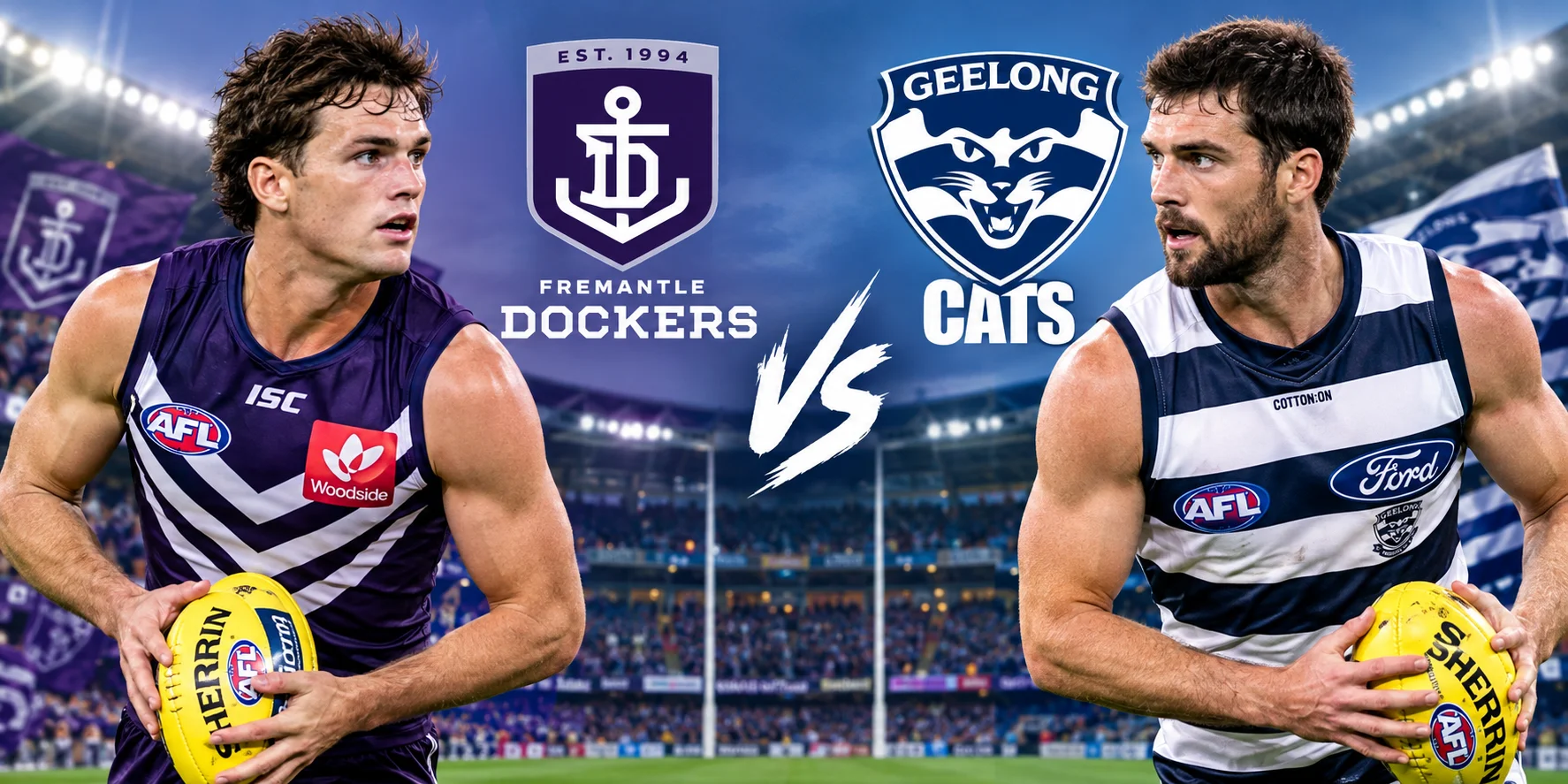
I was sitting at this café near Optus Stadium last week Campos Coffee, if you know Perth and this older bloke next to me just kept shaking his head. His Fremantle cap was probably older than my car. He’d been coming to games since the ’90s when the team was genuinely terrible, and I asked him what he was thinking about the Geelong match. He goes, “Mate, if we blow this, I’m done. Just done.” That’s the weight of it. That’s what this match is about.
Fremantle beat Geelong 120-106 in the semifinals on a Friday night at Perth Stadium. 59,725 people there. The kind of crowd that makes the stadium actually rock. It wasn’t comfortable. It wasn’t clean. Fremantle were up 38-7 at one point and looked like they might annihilate Geelong, then the Cats came storming back and nearly stole it with about a minute left on the clock. But Fremantle held on. Luke Jackson played like he was genuinely possessed. Patrick Voss kicked four goals. And that bloke at the café probably finally slept that night. This isn’t just another semifinal recap. This is about two teams that have actually figured each other out over the past couple of years, and now they keep running into each other when it matters most.
Fremantle vs Geelong: The Match Overview
On paper, sure, Fremantle’s been the best side all year. Minor premiers. The team that everyone said would finally get Fremantle to the Grand Final. But here’s the thing nobody wants to talk about — papers don’t kick goals in the third quarter when everything’s going wrong. Papers don’t have Patrick Dangerfield doing impossible things at age 34. Papers don’t panic when a 31-point lead starts evaporating. This semifinal was genuinely interesting because these aren’t strangers. Fremantle and Geelong have played each other three times in the last couple of years, and every single match has been the kind where you leave it not knowing what you just watched. Close. Weird. Competitive in ways that don’t always show up on the scoreboard.
Geelong walked into Perth with absolutely nothing to lose. Fremantle had everything to lose. And honestly, that changes things. Pressure works differently when you’re the underdog. When nobody’s expecting you to win, you can play loose. You can take risks. You can actually be dangerous. The weather that night was warm but not scorching. Clear skies. The kind of night where footy looks good on the telly and sounds better in the stadium. Fremantle wanted to push the pace, move the ball quick, tire Geelong out mentally if they couldn’t physically. Geelong wanted to slow it down and get it into their gun players’ hands. One wanted to run. One wanted to think. That’s literally the whole game right there.
Fremantle vs Geelong Recent Form
Fremantle’s basically been the only complete team this year. I’m not exaggerating. They move the ball like they’ve been practicing the same pattern all season which they have, obviously and most teams just can’t keep up with them. Andrew Brayshaw doesn’t miss a beat in the middle. Caleb Serong finds space like he’s got a map. Matt Johnson just keeps chugging along getting 25+ disposals without anyone really noticing. But and here’s a real observation that people miss Fremantle’s actually vulnerable when they drop marks. Three of their four losses this season came when their marking numbers dropped early. Not mid-game. Early. That’s a pattern. That’s something Geelong would’ve been studying tape about all week.
Nat Fyfe’s playing the best footy he has in years. I actually watched a replay of one match where he was just… everywhere. Not in an obvious way. In the way where 30 seconds later you realize he was already setting up the next play before the previous one had finished. Now Geelong. Man. They’re inconsistent, right? Some weeks they look like the second-best team in the comp, some weeks they look like they’re playing for a VFL spot. But in finals? They suddenly remember how to do this. They’ve been through it. They understand what September feels like. Patrick Dangerfield’s 34 and playing like he’s 28. Oliver Henry’s young and dangerous in the way that scares defenders. He kicked five goals in that semifinal just five. Some games he disappears. This wasn’t one of those.
Here’s what actually matters though: Geelong’s defense has been leaking. Bottom four for marks conceded and shots inside 50 in their last ten games. That’s the window Fremantle need to exploit. That’s the actual battle.
Fremantle vs Geelong Head-to-Head Record
These teams have properly locked into each other now. And I mean locked in. In 2024, Fremantle weren’t even in the top eight by the end of the season absolutely fell apart. Geelong were rebuilding. But even then, when they played in Round 22, you could feel it. Something was happening. That game at Optus Stadium in August 2024 was tight. Geelong won 73-62. Dangerfield was immense that day 20 disposals, 11 clearances, and just the way he moved around the ground made you realize he’s not done being dangerous yet. Fremantle’s midfield got bullied a bit. Or not bullied exactly. Just controlled.
Then Fremantle came back and actually won their next two home matches against Geelong at GMHBA. Which is weird because Geelong’s supposed to be unbeatable at home. Didn’t happen that way. Fast forward to this September and the semifinal happened. Luke Jackson was absolutely immense. I’m talking the kind of performance where you’re sitting there going “where did this come from?” He kicked two, set up another, and basically spent the whole night disrupting Geelong’s setup. He’s the kind of ruck who makes you wonder why more teams don’t have one like him. Two-way player. Strong overhead. Doesn’t panic.
The real pattern here is simple: these teams have figured out how to play each other, and it’s never comfortable for either side. Head-to-head is basically even. Next match could go either way. That’s what makes it interesting.
Key Players to Watch
Nat Fyfe is the guy you watch for Fremantle. Not because he’s going to kick six goals or have 45 disposals he might, he might not. But because he controls the game without making a noise about it. He’s genuinely thinking two steps ahead of everyone else. I’ve watched replays where he gets a handball off and you think he’s done his job, then 10 seconds later he’s already positioned himself for the next play. It’s weird. It’s intelligent. It’s the reason Fremantle actually wins games. Andy Brayshaw’s the captain and he’s the real pulse of the team. Track his numbers. 30+ disposals usually means Fremantle’s controlling midfield. 20-25 disposals means Geelong’s closing them down. He’s not flashy but he’s the guy who makes everyone else better because he’s always available, always in the right spot.
Luke Jackson’s the freak factor. He’s not a traditional ruck. He runs around like he’s a midfielder. He gets his hands dirty in contests. In that semifinal he was everywhere rucking, kicking, setting up. If he plays like that, Geelong can’t maintain their structure. For Geelong, Patrick Dangerfield is honestly still the best player on the ground even at 34. He doesn’t waste movement. He sees passing lanes before they exist. He’s the guy who wins games in close quarters. You can’t shut him down, but you can make him work for every possession.
Oliver Henry’s the dangerous one because he’s young and doesn’t have fear. He kicked five goals in that semifinal and just kept playing loose. Some games he’s quiet. Some games he’s a highlight reel. Gryan Miers is quick and clever. He finds the footy in congestion, makes ground, and puts defenders in bad positions. Not flashy but genuinely useful in close games.
Fremantle Team Strengths and Weaknesses
The Good: Fremantle’s handball game is genuinely impressive. They move it quick, sideways, backwards if they need to, but they’re always creating options. It’s not chaotic. It’s controlled. They can have 30 handpasses in a sequence and none of them are wasteful. That kind of control wears you down. Second strength: early game intensity. They’re aggressive early. They press hard. They make it hard for teams to settle into a rhythm. If Geelong can’t get the footy early, they’re already playing catch-up mentally.
Third one is kicking. When it gets to their tall forwards, they’re accurate. They’re not bombing it in and hoping. They’re hitting targets.
The Weakness: Here’s what keeps them up at night they get inconsistent with their marks. In three of their four losses this season, their early marking numbers dropped. Not their disposal numbers, not their tackles. Their marking. That’s a pattern. When they can’t take a clean mark early, they’re scrambling. And when you’re scrambling, you’re not controlling.
They also have lapses in concentration. One quarter they’ll look unbeatable, next quarter they’re sloppy with their entries. Geelong will study when those quarters happen.
Geelong Team Strengths and Weaknesses
The Good: Experience. Full stop. Dangerfield, Cameron Guthrie, these blokes have been in September so many times they probably know the Perth Stadium layout better than some Fremantle supporters. They don’t panic. They don’t make emotional decisions. When pressure comes, they just play footy.
Second: They’ve actually got a functioning forward line now, which they haven’t had consistently in years. Oliver Henry, Gryan Miers, Tom Hawkins still contributing that’s depth. They can genuinely score goals from inside 50, which they couldn’t do consistently before.
Third: They understand how to control a game’s tempo. They can slow it right down if they want. They make footy ugly. They make it a contest. Every possession becomes a battle. That wears teams down over four quarters.
The Weakness: Their defense is honestly bottom-four for a reason. They’re conceding marks and shots inside 50 at a rate that’s going to hurt them against a team that knows how to move forward. Fremantle’s not a team that’s going to kick it sideways and waste time they’re going to move it quickly and attack.
Consistency is the other issue. Some games Geelong looks second-best in the comp. Other games they look unstoppable. There’s no predictability. If the wrong version shows up, they’re in trouble. And against a minor premier, you can’t afford that.
Key Matchups That Could Decide the Game
Fremantle’s midfield vs. Geelong’s defensive pressure: This is literally the game. Fremantle want clean, quick footy in space. Geelong want to make it a contested mess. If Brayshaw, Serong, and Johnson get 25+ disposals each in clean conditions, Fremantle pulls away. If Geelong’s defense is pressing hard and forcing turnovers, they build momentum. Simple as that.
Fremantle’s talls marking vs. Geelong’s back line: Fremantle’s got size. Geelong’s conceding marks at a shocking rate. If Fremantle can win those early mark contests and I mean the first quarter, not the third quarter when the game’s decided they set up their forward line properly. If Geelong’s defense tightens up and holds, Fremantle’s stuck in sloppy entries.
Luke Jackson vs. Geelong’s midfield clean-up: Jackson won in that semifinal because he was cleaning up after contests and getting his hands on loose footy. If he’s doing that again, Fremantle’s setup is crisp. If Geelong’s cleaning up effectively, Fremantle’s mids aren’t getting the quick exits they want.
Patrick Dangerfield vs. Fremantle’s midfield pressure: Dangerfield’s a magician. But if Fremantle can press hard in midfield, make him work for every possession, suddenly he’s not creating the space he usually does. It’s about whether he can create gold from contested situations or whether Fremantle’s pressure is too intense for even him to escape from.
Fremantle vs Geelong: Recent Match Result
The semifinal was September 11 at Perth Stadium. Friday night. I watched it in a room full of Fremantle supporters who looked confident, then terrified, then confused, then relieved. That’s basically the whole match in emotions. Fremantle was brutal early. They moved the ball so fast and so cleanly that Geelong couldn’t even set their defense up. At one point it was 38-7. Not a contest. Fremantle looked like they were going to beat the living daylights out of Geelong. Their mids were winning everything. Their forward line was working. It was the kind of start where you thought about heading to the pub early because the game was done. Then third quarter happened and Oliver Henry suddenly remembered how to kick goals. He kicked three quick ones and suddenly Fremantle’s 31-point lead was looking shaky. Geelong started to believe. Their defense tightened. Their mids started getting access to the footy. By three-quarter time, Geelong had taken the lead. Genuinely. The minor premiers the best team all year were actually staring at a straight-sets exit.
That’s when it got interesting. Fremantle didn’t panic. Luke Jackson was everywhere, kicking, setting up. Patrick Voss kicked his third and fourth goals. The forward line suddenly remembered how to move the footy. And with 75 seconds left, Fremantle played Wharfie Time a song they’d only played twice all season and Voss kicked the final goal. Final score: 120-106. Fourteen points. But it felt like twenty. Fremantle had just refused to break when it actually mattered.
What Makes Fremantle vs Geelong an Exciting AFL Rivalry?
Here’s the thing: they’re not rivals in the traditional sense where there’s actual animosity. It’s more like. respect-based competition? They just happen to want different things and when they meet, something interesting happens. Geelong’s got the old guard still kicking. Dangerfield’s 34. Cameron Guthrie’s a veteran. They represent the era of controlled, methodical footy. Fremantle’s got the young energy. Luke Jackson’s still hungry. Fyfe’s got something to prove. It’s genuinely a changing-of-the-guard moment happening in real time.
But here’s what actually makes it interesting: the games are genuinely unpredictable. You can’t watch their recent history and say “Fremantle will definitely win” or “Geelong’s got this.” It could go either way. That semifinal proved it. Up 31 points, nearly loses. That’s not supposed to happen, but it does against Geelong. The footy style clash is real too. Fremantle wants to move it fast, run you around, tire you out. Geelong wants to slow it, grind it, make you work for every possession. It’s like watching two different philosophies fight it out. One’s aggressive, one’s patient. Both can win if they get what they want.
I genuinely think this is underrated as a rivalry. Everyone talks about Richmond-Carlton, Essendon-Collingwood for the history. But Fremantle-Geelong? It’s just consistently good footy. Two teams that respect each other enough to push hard, but don’t have the personal baggage that makes other rivalries weird.
Final Thoughts on Fremantle vs Geelong
Here’s what you need to know if you’re watching this go forward: Fremantle is the better team across a full season, but Geelong is the kind of opponent that can win any single game. That’s why these matches are worth watching. If Fremantle plays their footy move it quick, press hard early, control the contest they should win. If Geelong forces a grind and Henry gets going and Dangerfield works his magic, they can steal it.
The team that wants it more will probably win. Sounds simple, but it’s true. September footy isn’t about who’s played the best season. It’s about who refuses to lose when it actually matters. Fremantle showed that against Geelong when it looked like it was over. Whether they can do it again? That’s the question. One more thing: watch the third quarter. That’s when one of these teams will make a statement. That’s when habits start showing. That’s when you see who wants it.
FAQs
Who actually won the latest Fremantle vs Geelong game?
Fremantle won the most recent match, which was the semifinals on September 11, 2026. They came from 24 points down to beat Geelong 120-106 at Perth Stadium. It was the kind of game that makes people who watched it talk about it at dinner for weeks.
What was the actual score?
Fremantle 18.12 (120) beat Geelong 16.10 (106). The difference was 14 points, but honestly, it felt closer because Geelong nearly stole it at the end.
Where did they play this match?
Perth Stadium. Fremantle’s home, so they had the crowd behind them. That mattered, especially in the last quarter when things got tight.
Who are the main goal kickers for Fremantle?
Patrick Voss is huge for them up forward now. He kicked four goals in that semifinal. Mitch Crowden, Lachie Schultz, and Joshua Treacy are others who can kick goals. But it’s a whole team effort with Fremantle they don’t rely on one bloke.
Who kicks goals for Geelong?
Oliver Henry’s their main threat. He kicked five in the recent game and he’s dangerous because he can have weeks where he just dominates. Tom Hawkins has cooled down a bit compared to his peak, but he’s still reliable. Gryan Miers and Jed Bews can both contribute.
How many times have these teams played each other recently?
Three times in the last couple of seasons that really matter. Round 22 of 2024 where Geelong won 73-62. An earlier match in 2024. Then the semifinal where Fremantle got revenge. It’s a developing rivalry.
How have both teams been playing this season?
Fremantle’s been the best team all year genuinely. They’re the minor premiers, they move the footy beautifully, and they’ve been winning convincingly. Geelong’s been up and down. They had to battle through most of the season and they missed the top four originally, but they’ve found another gear when it matters. That’s the thing about them they don’t peak early.
What’s Fremantle’s biggest strength?
Their midfield and their ability to move the footy. They play the kind of attacking footy that’s hard to defend when it’s working. They also press hard early and can smother teams before halftime.
What does Geelong do best?
They grind. They’re physical. They don’t panic in tight moments. They’ve also got better forward options now than they’ve had in years, so they can actually hurt teams on the scoreboard. Experience is their other weapon — they know exactly what finals footy looks like.
Why should anyone care about this matchup?
Because it’s actually good footy. Fremantle represents the new, energetic, well-coached Western Australian team. Geelong represents the establishment team that refuses to get old. One wants to run, one wants to grind. It’s a genuine clash of styles. Plus, the winner probably goes all the way. In 2026, beating Geelong might be the difference between playing in October or going home early.
Can Fremantle actually win a premiership?
Yeah, they can. Luke Jackson’s finally healthy, Fyfe’s playing like a star again, and they’ve got the best team across a full season. But winning September is different from winning the season. They’ve got to beat Geelong next if they want Sydney after that. It’s possible. It’s just not guaranteed, which is why everyone’s watching.
What about Geelong do they have a shot?
Always. They’re experienced, they’ve got James Harmes and Dangerfield running the show, and they’ve shown they can beat anyone on any given day. But they’re not the favorites and they know it. The pressure’s on Fremantle, which sometimes helps Geelong.