


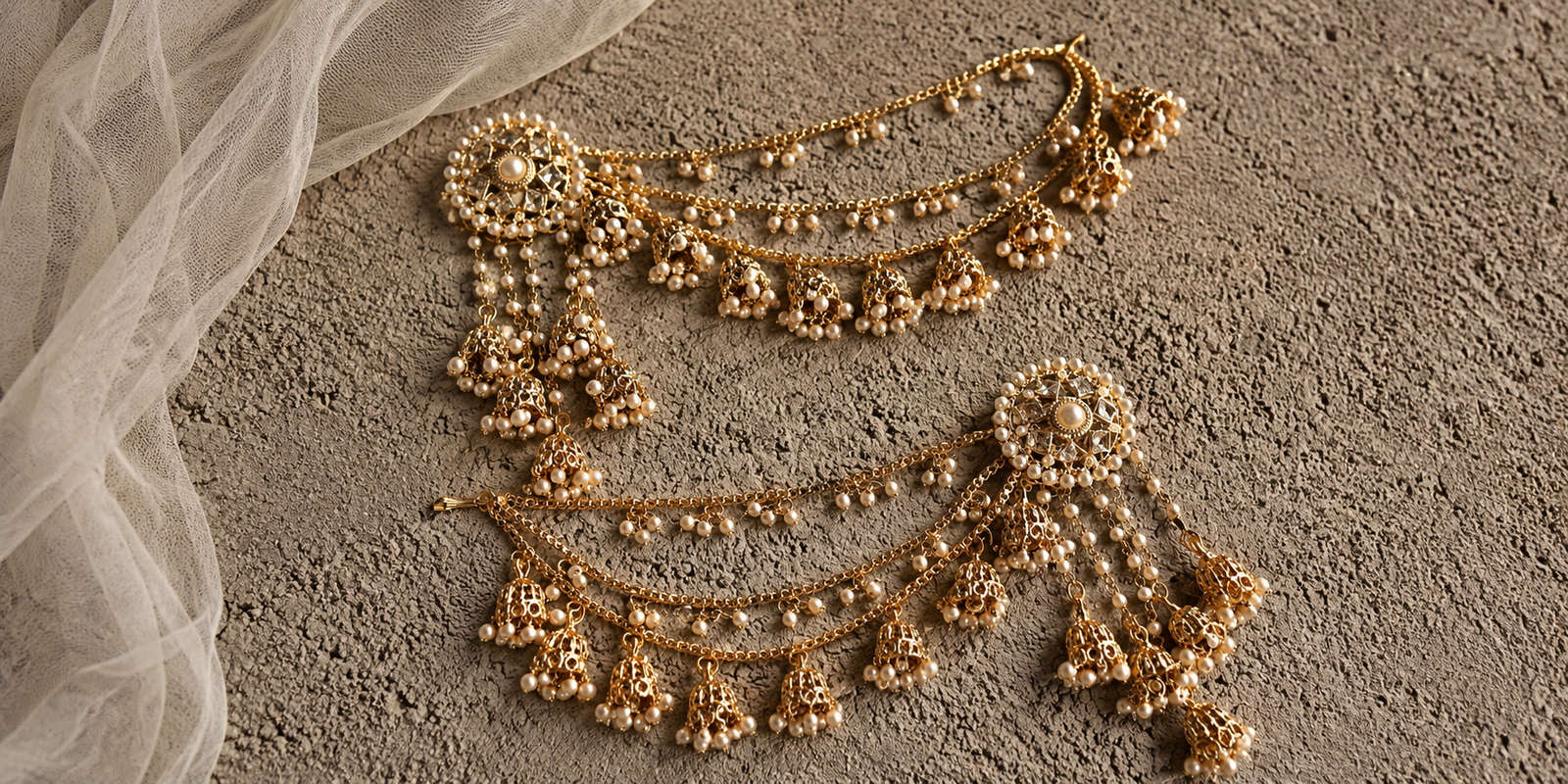
My cousin got engaged last year. For about three weeks that’s genuinely all anyone in the family talked about, jewelry. Real gold, or fashion pieces. A proper gold set for the wedding, or save the cash and grab something trendy online.
I didn’t have a strong opinion going in. But I sat there watching her flip between price comparisons and reviews, calling three jewelers in one afternoon like it was her actual job, and it kind of hit me. This isn’t really a complicated decision. It’s just that both options are “right” depending on who’s asking, and nobody really tells you that part before you start shopping.
So no long buildup. Gold versus artificial, what actually matters, and which one fits you better.
What We’re Even Comparing
Gold jewelry is, well, gold. Pieces made from real gold mixed with other metals so it doesn’t bend the second you touch it. Pure 24K’s too soft for daily wear, that’s why most jewelry ends up 22K, 18K, sometimes 14K depending on where you’re buying from.
Artificial jewelry (fashion jewelry, imitation jewelry, whatever your local shopkeeper calls it that week) is made from brass, alloy, glass, sometimes plastic, then coated with a thin layer of gold or silver. Some of it fools you across a room. Some of it doesn’t fool anyone past two feet, honestly.
That’s the short version. Real differences only show up once you’re wearing the stuff for a few months, not standing in the shop under those bright lights they always use.
Money. Since that’s probably why you clicked this.
Gold isn’t cheap, never has been. Prices shift with the market but anything above 10 grams starts feeling like an actual financial decision, not a shopping trip. A basic gold chain runs into the tens of thousands of rupees pretty easily, or several hundred dollars elsewhere.
Artificial jewelry flips that completely. Walk out with an entire matching set, earrings necklace bangles the works, for less than one small gold ring costs. That gap is basically the whole reason artificial jewelry blew up over the past several years, especially with younger buyers who want variety without wrecking their savings.
Say you’ve got five weddings this year. Wedding season never actually ends, does it. Five gold sets to match five outfits isn’t realistic for most households, that’s just math. Five artificial sets though, sure, doable, kind of fun even, styling something different each time.
A coworker once told me she’d budgeted around 40,000 rupees for “wedding season jewelry.” She split it up, one modest gold pendant set for her sister’s actual wedding day, then three artificial sets for the smaller functions around it, mehendi, dholki, a friend’s engagement thrown in too. First wedding season she didn’t feel broke by the end of it, she said. Small thing, but it stuck with me, because most people don’t plan it that way. They go all gold and feel it in their wallet for months after, or go all artificial and later wish they’d bought at least one real piece for the big day.
Gold Holds Value. Artificial Just Doesn’t.
This is where people make choices they end up regretting, if I’m being blunt.
Gold’s an asset, not just decoration. Sell it back, melt it down, use it for a loan, hand it down and it’s still worth something thirty years on. My grandmother bought her gold bangles sometime in the 70s. Today they’re worth several times what she paid for them back then. Try saying that about a costume set from some mall kiosk.
Artificial jewelry loses value the second you leave the shop. There’s no real resale market for it. What you paid is roughly what it’s worth, and even that number only moves one direction from there, down.
Dealbreaker? Not really. It just means don’t buy it expecting returns. Closer to buying a nice pair of shoes than buying gold coins, you’re paying for how it looks and feels right now, nothing more than that.
What Actually Happens After You Wear It
Higher-karat gold’s soft. It scratches, bends a little if you’re careless. But it won’t tarnish, won’t turn your finger green, and with basic care it survives generations without much trouble at all.
Artificial jewelry’s more hit or miss. Cheap pieces tarnish fast, sometimes within a few weeks if you sweat a lot or live somewhere humid, which is most of us if we’re honest. The plating rubs off and that shiny necklace from a month ago suddenly looks tired. Better artificial jewelry holds up longer, but you pay more for it, and at some point the price gap with lower-karat real gold starts closing anyway.
A friend bought this really pretty artificial choker for a sangeet once. Wore it exactly twice. Third time around there were dark patches showing where the plating had already rubbed off against her neck. Wasn’t thrilled, to put it mildly. So check plating quality before you buy anything, and keep artificial pieces away from water and perfume, perfume especially ruins it faster than people expect. I’ve watched it happen more than once at this point.
Gold care’s pretty simple. Clean it now and then with mild soap water, store pieces separately so they don’t scratch each other, and mostly just let time do its thing since the value only climbs.
Artificial jewelry needs more babying. Away from water and perfume, stored in an airtight pouch when it’s not being worn, and don’t expect it to look the same after a year or two of regular use. It won’t. That’s just the nature of it.
Spotting Decent Artificial Jewelry
Not all artificial jewelry’s created equal, and this is where a lot of people get burned buying blind.
Check the weight first. Good artificial jewelry has a bit of heft to it, cheap stuff often feels hollow, almost toy-like. Look at the plating closely too, under decent light if the shop lets you, edges and corners are usually where cheap plating peels first. Run a thumb along the edge before buying.
Smell matters more than people realize actually. Cheap alloy sometimes has a faint metallic smell right out of the box, that’s usually a sign the base metal’s low quality and the plating’s thin over it. Ask about plating type specifically too, gold plating and gold polish get used interchangeably by shopkeepers half the time even though they’re not the same, plating lasts a lot longer, polish wears off within weeks usually.
None of this is complicated. Nobody really explains it though, until your first bad purchase teaches you the hard way, which is sort of how most of us learn this stuff anyway.
Which One Fits Your Actual Life
This is really the question worth asking, not “which one’s better,” because that depends entirely on how you live day to day.
Wear jewelry daily for work? Want something doubling as a bit of financial security? Care about heirloom pieces you’ll hand down someday? Gold makes more sense then, even a small piece, even if it costs more right now.
Change your style every other week, go to a ton of events, don’t think of jewelry as an investment at all? Artificial’s the smarter buy for you. No real point sinking money into gold you’ll wear twice a year then forget about in a drawer.
There’s a middle category too that people forget about, the occasional wearer who still wants some quality. If that’s you, lower-karat gold, 14K or even 18K, sometimes makes more sense than either extreme. Real gold’s durability, a bit of resale value, without the price tag that comes with 22K or 24K. Decent compromise, one a lot of jewelers won’t actively push you toward though, since margins on artificial and high-karat gold tend to work better for them.
The Emotional Part Nobody Talks About
Buying gold, especially for weddings or big life moments, carries weight in a lot of families that goes beyond the metal itself. Tradition. A sense of security. Sometimes, if we’re being honest, a bit of social status mixed in there too. Artificial jewelry doesn’t carry that same pull, fair or not, and probably won’t for older generations regardless of how good it looks.
Though it’s shifting a little these days. More young couples going for one meaningful gold piece, a ring maybe, or a pendant, just to keep tradition alive, then filling the rest of the collection with artificial pieces for everyday wear. Decent middle ground, if you ask me. Keeps most people happy.
I’ve noticed this play out at nearly every family function lately actually. The older aunties still ask “asli hai ya artificial” the second they spot something new, half joking, half not really joking at all. Meanwhile the younger cousins are out here mixing one real gold ring with an entirely artificial set and nobody in that generation even blinks. Depends which room you’re standing in, I guess.
A Quick Word on Skin Reactions
Worth mentioning briefly. Some people react badly to metals in cheaper artificial jewelry, nickel’s usually the culprit. Itching, redness, that annoying rash along the neck or earlobes after wearing something new, that’s probably it. Real gold, 18K and up, rarely causes this since there’s less of those alloy metals mixed in.
Sensitive skin? Either spend more on better-quality artificial pieces, or stick with real gold for anything touching your skin directly. Earrings especially, that’s where I’ve personally seen the worst reactions show up.
A Few Mistakes Worth Avoiding
Buying gold in a rush right before a wedding, when prices are sometimes temporarily inflated because everyone else is buying too, is one I see constantly. Prices move daily, buying two or three weeks earlier often saves a noticeable amount.
Another one, assuming all artificial jewelry’s basically the same because it’s all “fake” anyway. It’s not. There’s a real difference between properly made alloy with decent plating and the stuff sold for almost nothing at street stalls, and that difference shows up fast once you’ve actually worn it a few times.
Last one, not asking for a hallmark or certificate when buying gold. Always ask. Reputable jewelers hallmark their gold and it protects you later, whether you’re reselling or just verifying purity down the line.
So Which One Should You Buy
No universal answer here, and anyone telling you otherwise is probably trying to sell you something.
Long-term value, buying for something big, planning to pass it down eventually, go with gold. Even a small piece is worth it over time.
Variety, flexibility, zero stress about losing an earring at some random party, artificial’s the practical pick and there’s nothing wrong with choosing that either.
Most people, honestly, end up wanting a bit of both anyway. A few solid gold pieces for the moments that actually matter, plus a rotating stash of artificial jewelry for everything else in between. That’s basically what my cousin did in the end, one gold set for the wedding ceremony itself, four artificial sets for everything happening around it. Best of both worlds really, and her savings account thanked her for it later that year.
Jewelry’s personal at the end of it all. It’s not only about what it’s made of, it’s about how it actually feels on you. Buy what fits your life, your budget, and honestly whatever mood you’re in that particular day. That’s really the whole answer. There isn’t some deeper trick hiding underneath it.