


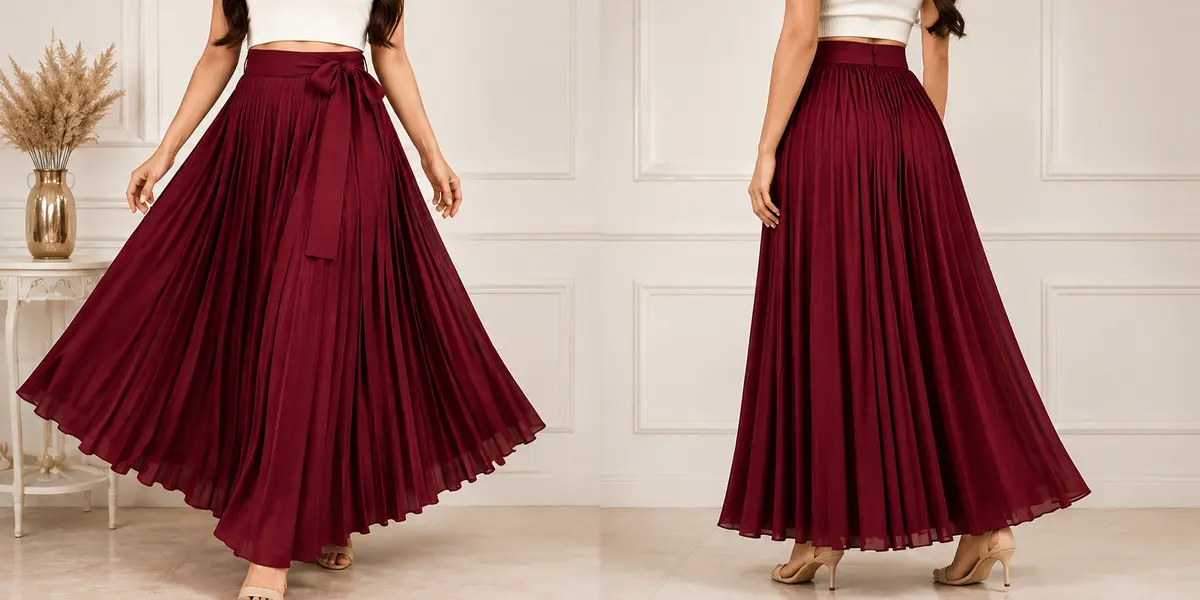
Just go ahead and take a look in almost any closet around you, you will definitely find there at least one skirt. Sometimes it will be hidden in a far corner of the closet, sometimes it will be a regular guest there. But anyway, a skirt is a piece of clothing that goes from an office to a romantic dinner to an everyday morning brunch in a blink of an eye.
Here’s another aspect of the matter that makes it difficult to understand. In fact, there are numerous skirts and each of them requires its own treatment and approach. Just walk around in the store or check the online catalogue and you will see at least a dozen of skirts that have totally different shapes, cuts, fabric characteristics and lengths. For example, a wool pencil skirt will hardly serve the same purpose as a chiffon maxi skirt.
And this article aims to figure out everything related to this garment – its types, cuts, styles, fits, and most important of all how to wear it.
Skirts
In the simplest terms, a skirt is defined by being an article of clothing which hangs down from the waist and covers the lower half of the body in a single piece, and not in two parts like the leg openings of a dress pants. The length, style, material used in making a skirt are all variations of the same concept.
While people wore some sort of a skirt-like outfit from time immemorial, the distinction between men and women was not quite apparent until fairly recently. From togas and kilts to dhoti and saris, there have always been plenty of skirt-like clothes in various cultures of the world. It wasn’t until the twentieth century and the rise of women’s fashion in the 1920s, followed by the popularity of miniskirts in the sixties, that the association of skirts with women’s fashion really came about.
Why is it popular, then? Mainly because of the comfort factor. A skirt allows for better air circulation, can be made tight-fitting or loosely hanging, and provides versatility in design. One skirt can make five combinations with different tops and vice versa. Not so much with jeans.
The real difference between a skirt and something like pants or shorts comes down to that lack of separate leg openings. It changes how the fabric moves, how the garment fits, and — for a lot of people — just how comfortable it feels to wear, especially when it’s hot out.
Types of Skirts: 15+ Styles You Should Know
There’s no shortage of skirt styles out there, and honestly, half the fun of shopping for one is figuring out which shape actually suits how you like to dress. Here’s a rundown of the ones you’ll see most often.
A-Line Skirt
Fitted through the waist, then flaring gently outward toward the hem — roughly the shape of a capital “A,” hence the name. This is probably the safest bet if you’re not sure what to buy, since it skims over the hips instead of clinging, and it doesn’t scream any particular era or trend. Wear it to work with a tucked-in blouse, or dress it down with sneakers and a plain tee. Flats or low heels finish it off nicely either way.
Pencil Skirt
Skinny, fitted, generally reaches the knee or falls just under it. This is the image that pops into mind when one hears the term “office skirt” – stylish, slightly formal, meant to be worn with a blazer or a button-down shirt. Heels can elevate this look, but a great pair of loafers is equally versatile on days without heels.
Pleated Skirt
Features vertical folds and pleats that add some dynamic to each step taken in this garment. Pleating is available in tight, barely visible micro-pleats and wide, flowy box pleats. This type of skirt has some prep-school element about it, some retro charm and looks fantastic with a chunky sweater in autumn season – wear sneakers or loafers, choose what feels better.
Maxi Skirt
Lengths vary but most commonly reach the ankles and feature enough of flow. Perfect for summertime weather worn with a fitted crop top or tank top. Goes best with sandals, but sneakers are another suitable choice.
Midi Skirt
Lies somewhere in between the knees and the ankles — mid-calf, to be precise. If you can have but one “in-between” skirt, chances are that it will be this one. Great for work, dinner dates and even on a regular Tuesday. Goes well with either a blouse or a sweater, and let the shoes speak for themselves – booties in winter and flats in spring.
Mini Skirt
Lies way above the knees. A bit daring and youthfully bold and not really something you’d wear to work every day. Graphic t-shirts and oversized sweaters complement this kind of skirt, and sneakers balance out its more dressy look.
Wrap Skirt
Wraps around at the front and ties up at the waist, which means that this style offers somewhat more flexibility than other skirts in terms of fit. Its diagonal hemline is its distinct design feature. Goes well with either t-shirts or off-shoulder tops and is a perfect choice for beach days and brunches with sandals or wedges.
Midi Skirt
Is somewhere between your knees and ankles; more specifically, mid-calf. If you can only have one type of skirt that bridges between the extremes, this is it. Ideal for work and dinner dates, as well as everyday Tuesdays. It can go either with a blouse or sweater, and the footwear will do all the talking; booties when it’s cold and flats when it warms up.
Wrap Skirt
Wraps itself at the front and fastens at your waist; that makes this skirt somewhat more accommodating compared to other types of skirts regarding fit. The diagonal cut of its hem is its unique design feature. Great with either t-shirts or off-shoulder tops, and best for beach days and brunches in sandals or wedges.
Slit Skirt
A close-fitting or straight skirt which features a split cut vertically through the fabric. The design element allows adding dynamics to the silhouette without altering its basic structure. Wear a slitted skirt with a tight-fitting top and high-heels and you will get the perfect evening look.
Tulip Skirt
The name of the skirt style comes from the silhouette that resembles the shape of the tulip flower – a close-fitting skirt which overlaps in front and has a rounded volume on the hip area. Less showy than an A-line skirt but with added shape. Ideal for office wear as a less traditional alternative to the pencil skirt.
Asymmetrical Skirt
As the name implies, the hemline of the skirt is intentionally asymmetric. It may be uneven, higher on one side and lower on the other or cut diagonally. As a modern look with an element of statement, it requires keeping the top part of the outfit simple and modest.
Mermaid Skirt
A fitted silhouette of the skirt is close-fitting until a certain point (usually the thigh area) and then it flares dramatically near the knee area to create a mermaid-tail like effect. More of a special occasion dress style than an everyday one. Worn mostly with a matching top.
Skirt Lengths Explained
The length can totally change the vibe of a skirt and is often one of the first choices you’ll need to make before deciding on the style or the material.
A mini skirt stops somewhere above the knee, typically mid-thigh level. These skirts are casual by nature, but do find their place in nightwear fashion and can be easily combined with tights during winter months.
A knee-length skirt stops right at the knee line or just slightly below the knee line – definitely one of the safest lengths which will fit almost any occasion.
Midi skirts have their hemline somewhere mid-calf, in between the knee line and ankle line. It seems that women who own many skirts, end up owning many midi skirts as well due to versatility of this length.
Maxi skirts go until the ankle line or very close to it. Comfortable, flowy and linked to summer months, but can be worn year-round, with the right top.
Ankle-length skirts sit right at the ankle bone — a touch shorter than a true maxi, which means a little more of the shoe gets to show.
| Length | Where It Falls | Best For |
| Mini | Mid-thigh | Casual, warm weather, going out |
| Knee-Length | At or near the knee | Work, everyday wear |
| Midi | Mid-calf | Nearly any occasion |
| Maxi | Near the ankle | Summer, vacation, relaxed elegance |
| Ankle-Length | At the ankle bone | Transitional weather, showcasing footwear |
How to Find the Correct Skirt for Your Figure
Just as a quick note, nothing mentioned below is written in stone. There is no need to fit in some sort of mold nor will there ever be any reason not to choose comfort. Consider what follows as inspiration.
For pear shapes, A-line or circle skirts are a nice way to create a nice contrast to the hips while a waistline makes the focus on the upper body. Those who have an apple figure should look into skirts that have a bit of flair, like A-lines or tiered skirts and try a slightly higher waistline than the natural one. Hourglass figures are perfect for pencil skirts or wraps due to the nature of how the skirts follow the waist-to-hip line. If you have a rectangular body type, it is worth trying skirts with pleats, tiers or a circle skirt to create some flow and motion as long as there is a fitted waistline. For an inverted triangle shape, try fuller skirts such as A-line, circle or maxi skirts.
Ultimately, everything boils down to proportion but that does not matter unless you look great in the skirt.
Tips for Selecting a Good Skirt Fit
It is easy to confuse between fit and size, however, they do differ greatly and that is one of the major things one needs to know in order to avoid frustration while buying skirts online.
High-waist skirts are placed above or right on the waist and are known to lengthen legs visually. Mid-rise skirts also fall on the waist and make for very comfortable wear and easy styling. Low-rise skirts are placed below the waist close to hips and give out more casual vibe. As for the skirt itself, there are fitted skirts that follow silhouette of the body and are either pencil or tulip shaped, relaxed skirts that are loose from waist down till the point where it does not become fully flared and flowy skirts such as maxi or tiered skirts.
What is important to remember here is that the skirts of the same size but of different fit may actually be very different.
Common Materials Used to Make Skirts and When They Can Be Worn
Cotton is a trusty material: breathable, easy to clean, appropriate for wearing throughout the majority of seasons. Denim is the strong and durable material – low maintenance, able to withstand wearing almost every day. Linen is perfect for the hot summer days because of its lightness, but it tends to wrinkle easily, so it may require a little more care from you.
Satin makes skirts look shiny and is used mostly in fancy ones – they need to be either hand washed or taken to the cleaner’s because of their delicate structure. Silk is even fancier: it is soft and luxurious fabric that needs special treatment and should be worn for special occasions. Chiffon is light and sheer material that is suitable for tiered and maxi skirts to be worn during warm and nighttime.
Wool is the material to wear when it’s cold outside, it gives a nice warmth and structure of the garment. It perfectly suits skirts of pencil or A-line silhouettes. Leather or imitation of it will bring a cooler mood to your skirt and it will be appropriate for cold weather.
Styles for Different Events
For casual wear, you can hardly go wrong with the good old denim skirt or an A-line skirt with a basic T-shirt and sneakers on a laid-back day. On workdays, pencil, midi, or A-line skirts with a tucked blouse or blazer are elegant and stylish without being overly fancy.
When going out on a date, it is better to add some personality with the help of a wrap or slit skirt combined with a fitted top and heels. Weddings and formal events also require a bit more fancy clothing such as midi or maxi skirts from silk, satin, and chiffon paired with a suitable top.
In the summer season, light clothing in the form of cotton, linen, and chiffon in any style paired with shoes works best. In winter, heavy fabrics such as wool or leather, tights, boots, and a chunky sweater are the right choice. And when traveling, comfortable and non-iron fabrics such as denim or cotton in A-line or midi skirt style, paired with sneakers or flats, come in handy.
Kind of Tops Work With Skirts
The easiest and most versatile option would be a simple t-shirt that goes with all types of skirts. Button-up shirts can be worn with a pencil skirt or an A-line one and look quite business-like. A blouse will bring your outfit to the next level for more formal occasions or dates. A sweater goes well with pleated or midi skirts and provides warmth when needed. Crop tops work great together with high-waisted skirts and make an excellent going-out look. Blazer can transform your basic top+skirt combo into something more intentional and stylish. Tank tops are perfect for warmer days to be worn alone or with a jacket.
Kind of Shoes Are Suitable for Skirts
Sneakers make your outfit more casual and comfy but go with mini, midi or even denim skirts without any doubts. The choice between flats is the perfect option that looks casual and dressy at once. Loafers bring some preppy vibe into your outfit and fit perfectly with pleated or A-line skirts. Boots are the best choice for colder days to be worn with midi and maxi skirts. High heels elongate your legs and look perfect when worn with pencil, wrap or slit skirts on formal occasions. Sandals are the best choice for warmer days in lighter fabric like linen or chiffon.
Shoes have to be the quickest and easiest thing you can wear that will shift the tone of your look without changing your skirt.
How To Wear Your Skirt In All Four Seasons
Springtime calls for skirts made of cotton or linen, like the A-line or midi skirts, that are worn along with a light sweater. The summer is when everyone gets to sport their mini, midi, and maxi skirts, and wear their thinnest fabrics with tanks or crop tops and little layers.
The fall season makes way for pleated, and denim skirts with a sweater, tights, and boots to layer up in as the weather gets cooler. And there is no reason why winter should stop you from wearing skirts; you can just wear woolen or leather skirts with thick tights, knee-high boots, and a heavy coat, and you’re good to go. It is basically all about layering; tights or leggings under the skirt, boots on top of them, and then a heavy coat over it all.
How to Choose the Right Skirt for Your Lifestyle
It is always important to think about the comfort first, since it is pointless to have a skirt that you hate wearing but looks fabulous on photographs. It is also crucial to consider the climate of the area in which you live, using light materials for hot climates, while wool is always welcome in cold places. In case your job requires certain clothes, knee-length and midi skirt models would be the safest options. Active lifestyle suggests choosing flowy or stretchable designs.
It is important to remember the maintenance of different types of material – while silk and satin will require extra care, jeans and cotton can last without any efforts at all. From budgeting perspective, skirts in classic shades usually become really worth it. Finally, there is no way how to avoid personal style – the most wearable skirts will always be those that reflect your unique fashion identity, and not just the fashion of someone else.
Common Skirt Styling Mistakes to Avoid
There are several mistakes that people make quite often when they put together their outfits. Mismatching the length of the skirt and the top can completely spoil the proportions of the clothing. Ignoring the weather and the type of the material – wearing wool in summer or chiffon in winter – is also a mistake. Putting volume on volume – wearing voluminous top with an equally voluminous skirt – can ruin the silhouette. Over-accessorizing and adding too many accessories can make the skirt look less stylish and attractive. Choosing an inappropriate rise of the waistband is also a common mistake. Finally, ignoring the comfort is the worst possible thing that one can do in this situation.
FAQs
Which are the most popular skirts?
A-line, pencil, midi, maxi, and denim skirts are the most popular ones due to the versatility of their design.
Which skirt style is most versatile?
Usually, the most versatile skirt style is A-line. Due to the shape, A-line looks good on any figure and can be dressed up or down.
Which skirt length is better for everyday wear?
Midi or knee-length skirts are more practical for everyday wear. These skirts are quite practical, and you will not face any trouble wearing them on a daily basis.
Which skirt should I pick based on my figure?
It is important to consider silhouette and proportion. Fitted skirts emphasize your body contours; A-line and flared ones help create proportionate silhouette.
Which tops go well with skirts?
Again, it depends on the skirt style. However, there are some universal choices such as blouses, fitted tees, and light sweater.
Is it possible to wear skirts in winter?
You definitely can wear skirts in winter. Tights, boots, and layers are enough to feel comfortable.
Which shoes go well with skirts?
It depends on the skirt type you are going to wear. You may wear sneakers, flats, heels, and boots for different occasions.
Which is the correct way of wearing a skirt?
A skirt should be comfortable at the waist and neither too tight nor too loose.
What is the difference between a midi and maxi skirt?
While the latter extends closer to the ankles or to the floor, a midi reaches mid-calf.
Which skirts are suitable for office?
Structured pencils, A-line, or midi skirts made from cotton or wool are better for office.