


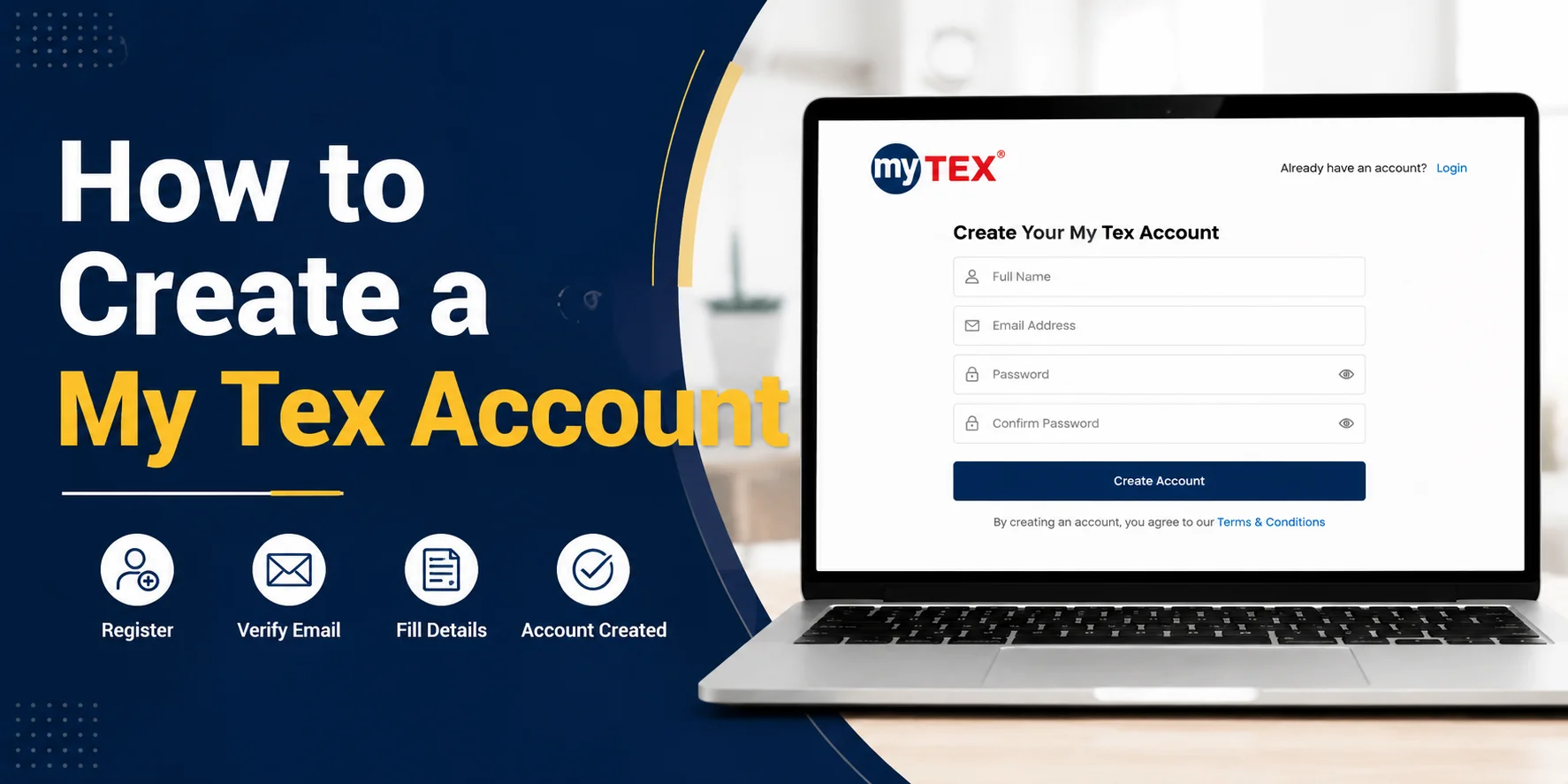
9:40 on a Tuesday and my cousin rings me, already halfway through a sentence. He’s been trying to set up his My Tex account for forty minutes. The page keeps dumping him back to the login screen. No error, no message, nothing that explains itself, just back to the start like the last four attempts never happened.
He’d been typing his email address into the username field.That was the whole thing. I spotted it in about two seconds and he went quiet, then said “no, that can’t be it,” in the voice of a man who has just written off his evening. It was it.
Nearly everything that goes wrong here is that flavour of problem. Not complicated. Just small and daft and unwritten, because whoever wrote the official instructions assumed you’d never make a mistake that basic.So this is the version with the basic mistakes left in. Everything in the order it comes at you, and the four or five places I’ve watched people give up entirely.
What you need in front of you first
Sort this before you open the page. Not fussiness. Here’s what happens if you don’t. You’re three screens in, you need a number you haven’t got, you go off looking for it, and the session quietly times out while you’re going through a drawer. Fine, start again. Except now there’s a half-built record in the system with your email stuck to it, so the second attempt tells you that email’s already registered. Twenty more minutes gone and no clue why.
Five things:
- An email address you’ll still own in three years. Personal, not work.
- A phone that can receive texts.
- Your reference or ID number, if the service you’re registering for wants one. Old invoice, welcome letter, membership card. Usually printed near the top.
- Ten minutes where nobody needs you.
- Somewhere to store the password that isn’t your memory.
Ten minutes and five things. That’s the whole ask.
Creating a My Tex account, step by step
These portals get redesigned every couple of years, so the buttons might not be where I’m telling you they are. The order of events doesn’t really shift though. Go by the sequence. Don’t sit there hunting the screen for my exact wording.
1. The register link is the small one
Too basic to include, I know. Gets asked more than anything else on this list.
Big centred login box, and then the actual sign-up link is small grey text underneath it or shoved off to one side. So the big box gets filled in first, obviously, because it’s the big box. Rejected. Site must be down. That’s the loop, and it burns ten minutes before anyone thinks to look at the rest of the page.
Register. Sign up. Create an account. Sometimes New user? Small text, in a spot your eye slides straight past.
Also, get there by typing the address yourself or from your own bookmark. Not from a search result. Fake login pages for account portals are basically an industry at this point, and they work precisely because people land on them already rushed and half paying attention.
2. Email address
The verification code goes here, so type it slowly and read it back once before you continue. One transposed letter and you’ll be refreshing an empty inbox for ten minutes, blaming the portal.
On work versus personal email. If the account’s for business, a work address feels like the correct choice, I get that. Problem is your password reset runs through that inbox. Jobs end. Companies switch providers. IT closes mailboxes and doesn’t tell anybody. Two years from now you’ll have forgotten this password completely, and that reset email is your only route back in. No inbox, no account. Personal address, then.
3. The verification code
Lands in thirty seconds usually. Six digits. Expires quickly, often fifteen minutes, sometimes less than that.
Two things go wrong here more than anything else. Gmail loves filing these under Promotions or Spam, so look there before deciding it never sent. And this next one catches nearly everybody: if you open your inbox in the same browser tab to grab the code, you can lose the sign-up page and the session with it. New tab, or read it off your phone. Leave the sign-up page alone.
Nothing after a couple of minutes, hit resend. Once. Jab it five times and some systems throttle you, and then it’s an hour before you can try again. I’ve done that. You just sit there looking at a form you’ve already filled in.
4. Password
The rules will be on screen. Eight characters minimum, a capital, a number, a symbol, that sort of thing. Some portals quietly reject certain symbols without saying which ones, which is a lovely feature to discover at 10pm.
Don’t reuse your email or banking password here. If this account ever turns up in a breach dump somewhere, you want the damage contained to this account.There’s a shape for this further down if you want one.
5. Your details
Name, date of birth, address, phone. Sometimes an ID number as well.
One rule here and it’s the only one that counts. Copy everything off your official documents letter for letter. Their records say Mohammed, you write Muhammad, it fails. If your address on file is still the old flat, put the old flat and fix it afterwards from inside the account. Initials, shortened surnames, dropped middle names, any of it can throw the match off.
Nobody’s sitting on the other end deciding whether you basically meant the same thing. Two bits of text get held up against each other and yours doesn’t match. That’s the entire judgement being made.
6. Phone number and two-factor
Some portals treat this as optional at sign-up. Do it now anyway, while you’re already here and mildly invested. If you leave it for later you won’t come back and do it. Nobody comes back and does it.
Two-factor means a stolen password isn’t enough on its own someone would need your phone as well. Given this account probably ends up holding your address and ID details, six extra seconds at login is a fair trade.
If it offers you an authenticator app rather than SMS, take the app. SIM swap fraud, for one. Also app codes need no signal at all, so a lift, a basement, a dead stretch of motorway, none of it stops you getting in.
7. Log out, log back in
You’ll get a confirmation screen and probably a welcome email.
Now log out and log straight back in from the proper login page. Feels like pointless busywork, I realise. It isn’t. It proves the account exists, proves the password saved the way you think it did, and proves the two-factor flow works, all while you’re calm and have time to deal with it. Finding out any of that at 8am on a deadline is a very different experience.
8. Link your records
Registering and linking are two separate jobs, and this is the step people stop short of. They sign up, land on an empty dashboard, decide something’s broken.
Look for Link an account, or Add a service, or Connect record. This is where the reference number earns its keep. Once it’s linked the dashboard populates and the thing becomes useful instead of decorative.
Two practical notes. If you’ve got several things to link, do them all in one sitting while the paperwork’s already spread across the table, because digging the same folder out three times over three weeks is nobody’s idea of fun. And when a link fails, it’s almost always a formatting quirk in the reference number. A leading zero you dropped. A dash you skipped. Letters you assumed were capitals. Copy it across character for character.
A password shape worth stealing
If you want a password you’ll actually remember, without saving it in your own WhatsApp:
Two unrelated words, then a number that means something only to you, then a symbol.
Two nouns you can picture that have nothing to do with each other, a two-digit number that isn’t your birth year, symbol on the end. BrassLantern62! is the shape. Don’t use that one, obviously. I’ve just published it.
It works because length beats cleverness almost every time, and because a strange mental image sticks in a way that P@ssw0rd123 variations never do. Unrelated words also aren’t sitting in the dictionary lists that automated attacks chew through.
Quick check before you move on. Twelve characters or more? Different from your email password? Could you type it from memory tomorrow morning, before coffee? Saved somewhere other than browser autofill? Three yeses is fine. Four’s better.
Where people get stuck
Email already registered. You’ve probably started this before and abandoned it, or somebody set an account up on your behalf. Don’t register again under a different address — that’s how you end up with two half-accounts and a support ticket. Use forgot-password on the original email and recover what’s already sitting there.
No verification email. Spam, then Promotions, then check the address you typed for a typo, then think about whether a work firewall is eating it. In that order. Support is the fifth thing you try, not the first.
Couldn’t verify your details. A mismatch, almost always. Check your name against your ID. Date format, too. DD/MM/YYYY or MM/DD/YYYY, and plenty of these forms won’t tell you which they’re after until you’ve had it wrong twice. Check whether your official surname includes something you habitually leave off.
Page keeps reloading. Cached junk from an earlier attempt, nine times out of ten. Clear it, or just open an incognito window and start clean. One tab only, as well. Two copies of the same sign-up running at once genuinely confuses some of these systems.
Locked out. Nothing for it but waiting, somewhere between a quarter of an hour and a full one depending on the system. Trying again mid-lockout just resets the timer, so stop touching it.
Password rejected even though it meets the rules. Often an invisible trailing space, dragged along from copy-pasting out of a notes app, counted in one field and not the other. Type it manually both times. Worth checking your keyboard language too phones set to a different layout can produce symbols that look right and aren’t.
An actual example, since the abstract version helps nobody
Client of mine runs a two-bay workshop. Sharp about the trade, absolutely hopeless with web forms, and fully aware of both facts.
He tried the sign-up himself on a Thursday. Failed. Went again Friday. Failed. By Saturday he’d decided the problem had to be his phone number, so he went out and bought a new SIM. Forty dirhams. For nothing whatsoever, as it turned out.
When he finally sent me a screen recording it took under three minutes to spot. His registered business name had “Est.” in it. Short for Establishment, which is how a lot of trade licences round here get written. He’d been typing the whole word out. Thought the short version looked sloppy on a form. The system wanted what was printed on the licence, nothing else. Three letters and a full stop, and it went through on the first try.
The second problem is the one I actually think about more, though.
He’d registered under his own email, which was fine, but he’d handed the password over to Reem, who does his admin, so she could log in as him. Which meant every verification code landed on his phone. So every single time she needed to do anything, she had to ring him and get him to read out six digits. He was being interrupted six or eight times a day by the account that was supposed to be saving him time.
The fix was checking whether the portal allowed multiple users on one account. It did. Added her properly, her own login, her own codes. Ten minutes of work, and he’d spent three weeks living with it.
The other thing he’d done, which I only noticed later, was save the login page as a bookmark from a Google result rather than the real address. Legitimate page, as it happens, just an odd redirect URL that stopped working after their next site update. So one morning the bookmark went dead and he assumed the account had been deleted. It hadn’t. Bookmark the actual login page, from the address bar, once you’re already on it.
That’s the transferable bit. Not the “Est.” thing, though do check your exact spelling. The bit about not sharing one login between two people, which always looks simpler in the moment and never is.
Three things to do before you close the tab
Not later. Now, while you’re logged in and it’s fresh.Bookmark the real login page so you’re not searching your way in every time. Searching your way in is exactly the habit phishing pages are built around.Add a backup email or recovery number. Ten second job in settings, and it’s the difference between a reset you handle yourself and a phone call you don’t want to make.
Screenshot the dashboard and your confirmation number. Slightly paranoid, costs nothing, and I’ve seen it settle a disagreement about what got submitted and when.While I’m on it, a small opinion. Security questions are close to worthless. Mother’s maiden name, first school, first pet half of that is public and the rest is guessable by anyone who’s scrolled your profile for five minutes. If you’re forced to set them, treat the answers as extra passwords and put nonsense in. Your first pet was Corrugated Tuesday. Write it down somewhere sensible. Far safer than the truth.
Two-factor is the one that earns its place. Most of the rest is decoration.
When you can’t log in three months later
Account exists, weeks pass, now it refuses you.
Caps lock first, because it’s embarrassing how often that’s the answer. Then check you’re actually on the right portal, since some organisations run two or three near-identical systems that each need their own separate login. Then password reset, which goes to your registered email, which is the third time in this article that using a personal address has saved you.
If the reset emails aren’t arriving either, that’s when you call. Have your reference number, registered email and ID sitting in front of you before you dial. Turns a twenty minute call into five.One habit worth building: log in every couple of months whether you need to or not. Dormant accounts get deactivated on some systems. And a login you touch occasionally is a login you still remember.
Is it worth the bother?
For a genuine one-off you’ll never repeat, maybe not. If there’s a route through without registering, take it and don’t feel guilty about it.If you’ll be back a few times a year though, then yes, easily. The value isn’t in the sign-up itself. It’s that afterwards everything sits in one place with a history attached, and you stop losing afternoons to hold music and “can you confirm your address for me.”
Set it up on a quiet evening when nothing’s urgent. That’s genuinely the whole trick. Everyone I know who loathes their My Tex login built it in a panic, and you can tell.Ten minutes now, and then you don’t think about it again. Which is rather the point.
FAQs
How long does it take to create a My Tex account? Five to ten minutes with your details ready. Longer if the verification code goes wandering, which is the usual delay.
Can I do it on my phone? Yes, works fine. The annoyance is that fetching the code means switching apps, and switching apps can drop the session. If there’s a laptop nearby, sign up on the laptop and use the phone for the code.
Do I need a reference number to register? Not usually for the basic registration. Almost always yes for linking your actual records afterwards. Old invoice or welcome letter, near the top of the page.
The verification email never came. Now what? Spam folder, Promotions tab, then double-check the address you typed, then consider a work firewall. Resend once and give it two minutes before trying again.
Can two people share one account? Technically yes. Practically, don’t. Codes go to one phone and the second person ends up permanently waiting on the first. Look for a multi-user option instead, plenty of these portals have one.
I’ve got an account but can’t remember which email I used. Try forgot-username if it’s offered, it’ll usually work from your phone number or ID. Otherwise call support with your reference number to hand. Resist the urge to just make a fresh account, it makes the eventual cleanup worse.
Is it free? Registration normally is. Individual transactions through the account may carry their own fees, shown before you confirm anything. Read the number before you tap.
What are the password rules? Usually eight characters with a capital, a number and a symbol. Go longer than the minimum anyway.
Can I change the email address later? Generally yes, from account settings, and you’ll need to verify the new one before it takes effect. Keep the old address alive until you’ve confirmed the change actually went through.
What if I don’t use it for a year? Some systems deactivate dormant accounts. Usually reversible, but it’s a phone call you didn’t need to make. Logging in occasionally avoids the whole thing.
Is it safe to put my ID details in? On the genuine portal, yes. Make sure you got there by typing the address or using your own bookmark, check the connection’s secure, and never enter anything on a page you reached through an unexpected email or text. That’s where the actual risk sits, not with the portal.
Can I delete a My Tex account once it’s set up? Usually, though it’s rarely a one-click job and it often has to go through support rather than settings. Bear in mind that deleting the login doesn’t always wipe the underlying records, since those are held for their own retention periods. If you just want to stop the emails, look for notification preferences first. Deactivating is a much smaller decision than deleting and easier to undo.
My name is spelled differently on my ID and my old paperwork. Which one do I use? The one the system already holds, which is usually whatever’s on the most recent official document. If you’re not sure, start with the ID version, and if verification fails, try the older spelling before assuming something’s broken. Once you’re in, update the details so the two match and you never have to think about it again.
Do I need to set this up before I can actually use the service? Depends on the service. Some things can still be done over the counter or by phone without an account at all. But the online route is generally faster and leaves you a record you can go back and check, which the phone route doesn’t.