


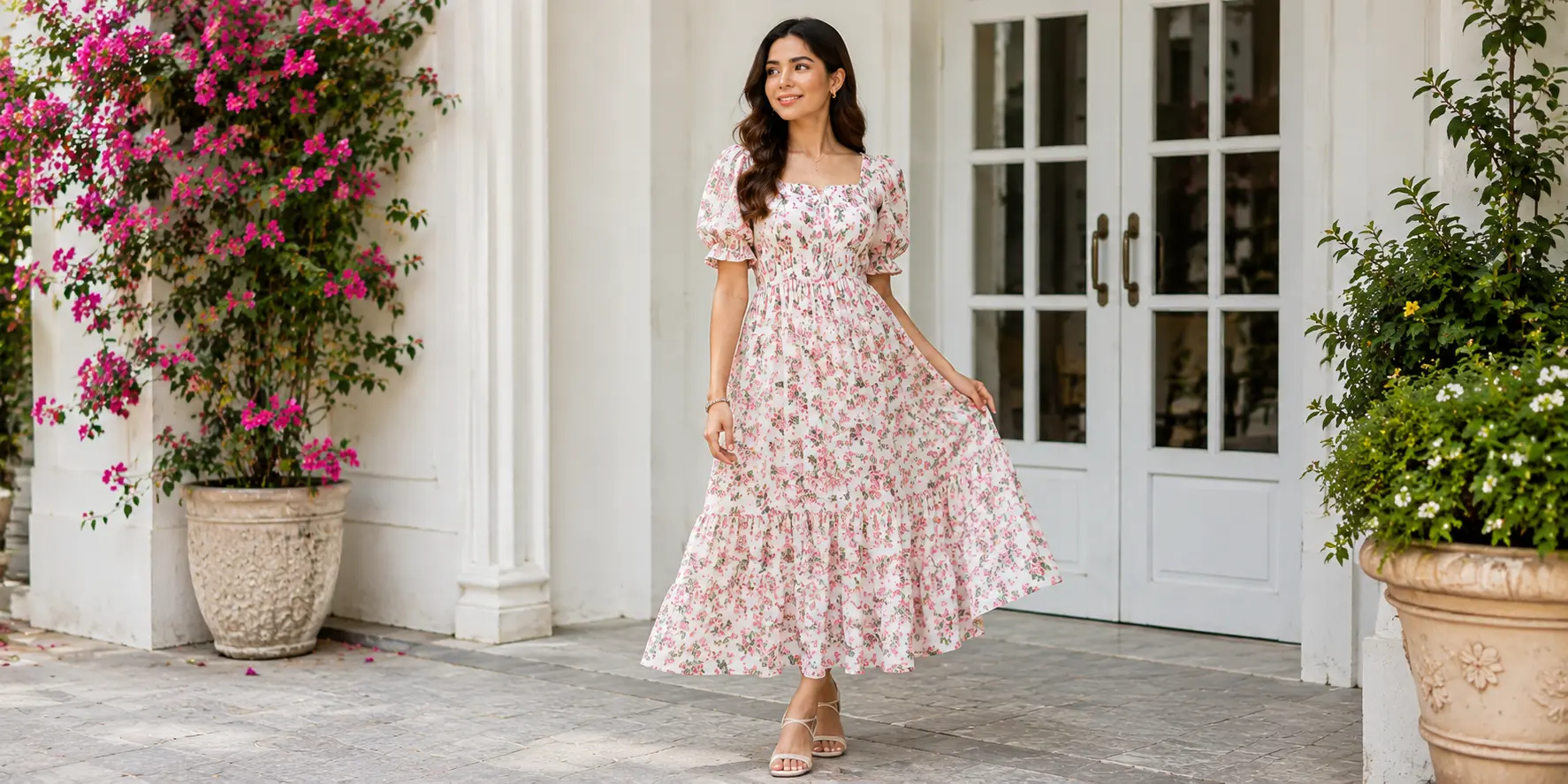
You know those days when the air itself feels thick and sticky? No girl wants fabric sticking to her or scratching or holding heat in. The best summer dresses kind of disappear once she’s wearing them. They just move with her. Stay cool. Still look like something she picked herself.
Honestly I’ve seen this so many times I stopped counting. Last summer, my friend’s daughter Maya – she was nine – already knew exactly what she didn’t like against her skin. We stepped into this small shop that smelled of new cotton and that clean floor polish smell. She tried three dresses. The first had a stiff little collar. She kept pulling at it the whole time. Second one was shiny stuff that stuck to her back the second she sat down. Third was soft pale green cotton, loose skirt, thin straps she could tighten herself. She spun once in the mirror and said, “This one doesn’t feel like clothes.” That line stayed with me. That’s the whole point really.
This isn’t about chasing whatever color is popular online this month. Those things change too fast. It’s about making something a girl will actually pull out on a random hot Tuesday when she needs to run around the park, then go to a birthday, then maybe just sit on the floor drawing for an hour. Comfort comes first. Always. Then how the dress moves. Then that little bit of personality that makes it feel like hers instead of just another thing from a store.
Fabric is where it all starts for me
You can sketch the prettiest shape in the world and still end up with a dress nobody wants to wear if the fabric is wrong. I’ve seen it. Someone falls for a print, buys the whole bolt, sews it up, and then the girl puts it on and starts peeling it away from her skin because it doesn’t breathe at all.
Cotton is still the one I grab most of the time. Not the thick kind for winter. The light stuff — lawn, voile, soft poplin. It feels cool right away. Gets softer every time you wash it. Handles juice and grass and the odd ice-cream drip without falling apart. Linen is good too if you don’t mind the wrinkles. Some people actually like that slightly crumpled look. Makes the dress feel like it’s been lived in.
Rayon can hang nicely but needs careful handling. Pure polyester? Almost never. Those shiny party fabrics look great under shop lights and feel like plastic after twenty minutes outside. I’ve watched girls tug at their collars and ask to change halfway through an afternoon. Not worth it.
Color matters more than most people say out loud. Dark colors just soak up heat. Pale ones bounce it away. That doesn’t mean every dress has to be white or soft pink. Soft blues, dusty greens, coral, light yellow — all of those work. Patterns help hide the stains that are coming no matter what. Tiny florals, small checks, simple stripes. Big bold prints can look fun on the hanger but sometimes swallow a smaller body. I usually go for something that doesn’t shout from across the room.
The shape has to let her move
Tight is the enemy once the temperature climbs. Even a dress that looks a bit fitted needs room to breathe and bend. A-line shapes are hard to mess up. They skim the body and then flare just enough so she can run or climb or sit cross-legged without the fabric pulling. Empire waists sit high and let everything below hang loose. Great for girls who are still growing and don’t want anything squeezing their middle.
Sundress styles with thin straps keep the shoulders free. Flutter sleeves give a little coverage without trapping heat. Full sleeves almost never make sense unless the fabric is the lightest possible and she can push them up easily. Length depends on the girl and what she’s doing. Mini works for older teens who want something casual. Knee length or just above stays practical for most ages. Tea length looks sweet for special days but can get in the way if she’s climbing trees or chasing a dog.
I once made a dress for a girl who danced around the garden every single afternoon. Soft gathered skirt that hit mid-calf. A bit of smocking across the chest so it stretched a little. Thin straps she could fix herself. She wore that thing until the hem started fraying. Her mom finally had to hide it so she’d put on something else. That’s when you know the shape worked.
The small details that matter more than people think
I still remember the look on this six-year-old’s face the first time she found the pockets. Her eyes got so wide. It’s funny how such a small thing can matter that much. Closures should be easy too. Front buttons look nice but little kids struggle with them sometimes. A zipper with a long pull or just one button at the back usually works better. And if you put elastic or smocking at the waist the dress still fits after she grows a bit.
Trims are where people go overboard. Heavy lace scratches and holds heat. Light eyelet or a soft binding is usually enough. Embroidery looks nice if the thread is fine and doesn’t stiffen the fabric. Skip anything that pokes or catches on skin. Necklines matter too. Round is safe. Square looks clean. A soft V can be pretty but keep it modest for younger girls. Boat necks sit nicely with thin straps.
Color and pattern without overthinking
Some girls want soft pastels. Others want something brighter. There’s no single right answer. For younger ones, playful prints — tiny animals, simple flowers, small geometrics — feel right without looking babyish. For tweens and teens, cleaner lines and more muted combinations usually work better. Soft sage with cream. Dusty rose with white. A quiet stripe in two close tones.
Mixing solid and print can balance things. A plain bodice with a printed skirt, or the other way around, often looks calmer than an all-over busy pattern. Large-scale prints can swallow a small body. Smaller, denser ones sit better. I always try to show the girl a few options early. Watch which fabric she reaches for first. That choice tells you more than any mood board.
How I actually design one
If I’m starting from scratch I measure carefully. Chest, waist, hips, length from shoulder to where I want the hem. Then I add ease. Summer dresses need movement. Two to four inches through the body is usually enough for a relaxed fit.
I cut on the grain. Bias looks elegant but stretches and can go weird in the wash. Straight grain holds its shape better for everyday wear. Seams stay soft — French seams or a clean overlock so nothing scratches. I always pre-wash the fabric if it’s cotton. Shrinkage is real and it’s annoying to find out after you’ve already sewn everything.
Fitting on a real body beats a dress form every time. Girls move. They twist, reach, sit, run. You need to see how the armhole sits, whether the straps slip, if the skirt rides up when she sits. Adjust until it feels right on her, not just on the table.
For anything that will be worn a lot, keep the construction simple. Complicated linings and extra layers just add heat. One good layer of fabric is usually enough. A light slip only if the fabric is sheer.
A dress that actually got worn to pieces
Last summer a small kids’ clothing project asked for dresses that could handle park days, juice spills, and still look okay if they stopped for ice cream afterward. We used a soft mid-weight cotton in pale blue with tiny white flowers. Bodice gently gathered into a high waistband. Skirt full enough to twirl but not so full it got trapped under her when she sat. Thin adjustable straps. Two decent side pockets. Simple back button.
The first girl who tried it on was six. She spun in the mirror, shoved her hands in the pockets, and said she was keeping it on for the rest of the day. Her mom later told me she wore it twice a week for almost two months. We made the same shape in soft yellow and a light green check. Same feedback every time. That’s the kind of result that matters more than any polished photo.
Mistakes I keep seeing
People fall in love with the idea of a dress and forget how it will actually get used. Heavy beads that catch on playground equipment. Fabric that wrinkles into a crumpled mess after ten minutes in a car seat. Necklines that gap when she bends. Straps that leave red marks on her shoulders.
Sizing is another big one. Girls’ bodies vary a lot even at the same age. A bit of adjustability — ties, elastic, extra button positions — makes the dress usable for longer. And care instructions matter. If it needs dry cleaning, most parents won’t buy it for everyday summer wear. Machine-washable and low-iron (or better, no-iron) wins in real life.
Making it feel like hers
One nice button or a tiny bit of stitching near the bottom or some different color binding around the neck can be plenty. Those quiet touches get noticed without trying too hard. Older girls sometimes like a bit more shape in the top or a soft tie at the waist — it just looks a little more put-together.
For younger ones keep the joy front and center. Colors that make them smile. Shapes that move when they do.
When you put everything together
When you put everything together it’s not about ticking boxes on a list. You just have to watch the girls. See how they run around. Hear what they grumble about. Notice the dresses that get worn until they’re falling apart and the ones that never leave the drawer.
Start with fabric that breathes. Choose a shape that gives freedom. Add the practical bits — pockets, easy closures, adjustable straps. Then bring in the color and personality that make it feel like it belongs to her.
The best ones don’t just look good in a photo. They survive a full day of living and still make the girl feel good when she puts them on the next morning. That’s really the whole point.
FAQs
What fabric works best for summer dresses for girls?
Lightweight cotton is the one I trust most. It breathes, washes easily, feels soft. Linen is nice if you can live with the wrinkles. Stay away from heavy synthetics that trap heat.
How long should the dress be?
Depends on the girl and what she’s doing. Everyday wear usually sits well at knee length or just above. Shorter works for older girls who want something casual. Longer lengths look pretty for special days but need a fabric that doesn’t cling when she sits.
Do pockets really matter that much?
They do. Most girls light up when they discover them. Side seam pockets are simple and don’t mess with the shape of the skirt.
How do I keep a dress from looking too young for an older girl?
Cleaner lines, more muted colors, fewer fussy details. A simple silhouette in a nice fabric often looks more grown-up than something covered in big prints and trims.
Can I make one without a sewing machine?
You can try hand sewing or no-sew methods, but a machine gives stronger seams and cleaner finishes. For something that will be washed a lot, machine construction holds up better.
What’s a good beginner pattern?
A simple A-line or empire waist sundress with not too many pieces. Start basic and adjust the length or straps as you go.
How much ease should I add?
Enough that she can move freely — usually two to four inches through the body for a relaxed fit. Always check the finished measurements against her actual ones.
Does it need a lining?
Only if the fabric is see-through. A light cotton lining or simple slip keeps things covered without adding much heat.
That’s really it when you strip everything else away. Pay attention to the girl who’s going to wear it. When the fabric, the shape, and the small practical details line up with how she actually lives, the dress works. And when it works, she’ll reach for it again and again until the fabric finally gives out.