


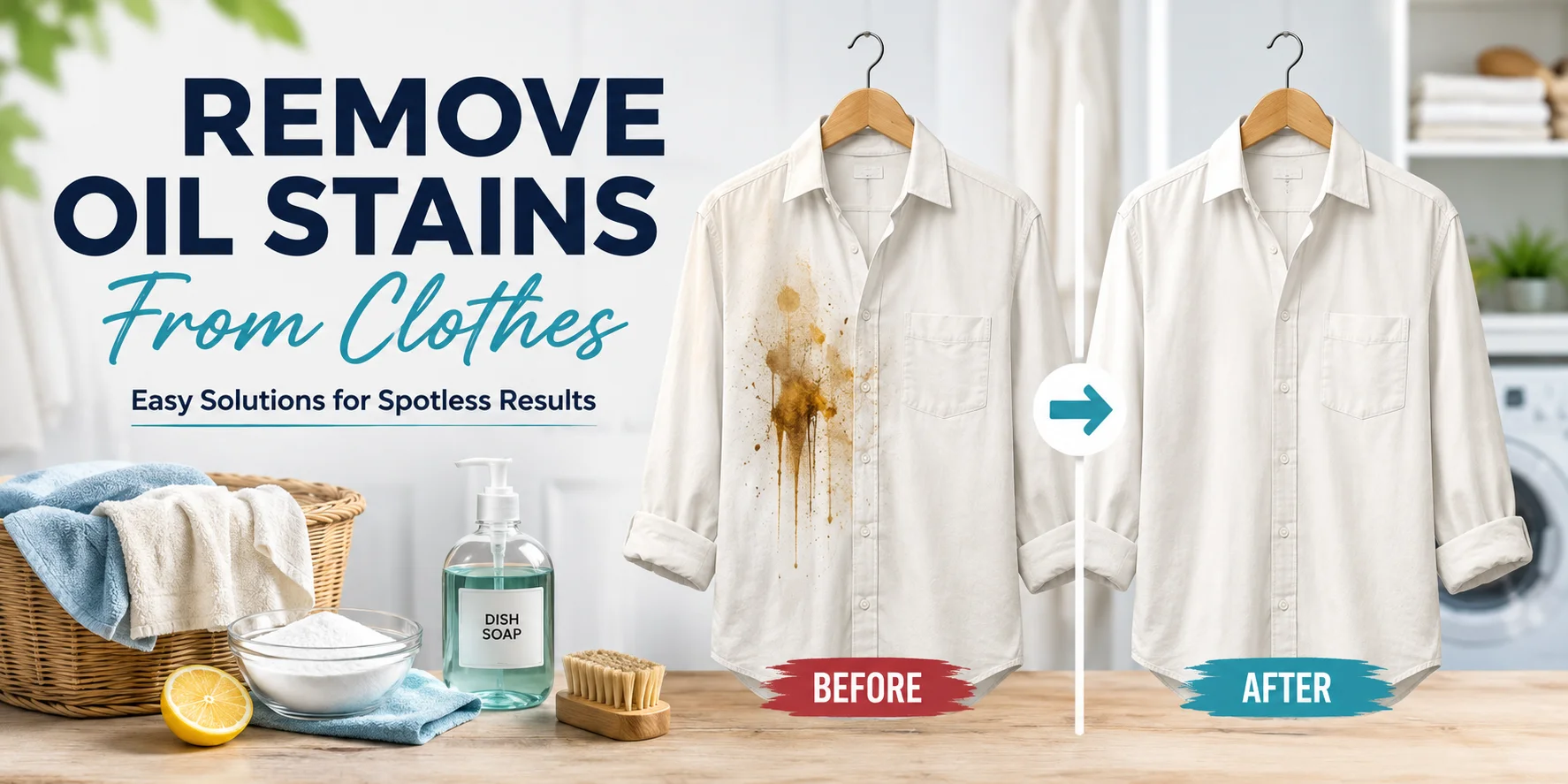
Pepperoni pizza. Grease-side down. My Favorite white t-shirt, at a friend’s apartment last spring. I just sat there staring at the spot like staring would fix it. It didn’t, obviously. Two hours later, back home, the stain had gone that horrible translucent look — you know the one, where you can practically see through the fabric to the skin underneath. I figured the shirt was done for.
It wasn’t, though. Oil stains, weirdly, are one of the more fixable messes your clothes can get into — as long as you don’t panic and shove the thing straight in the wash. Do that and the heat basically seals the stain in for good. So, step one, before anything else: don’t wash it yet. Here’s how to actually get oil out of clothes without making it worse.
Why Oil Stains Are Different from Other Stains
Most stains — coffee, wine, grass — are water-based. Oil isn’t. It’s hydrophobic, meaning water basically slides right off it instead of breaking it down. That’s why blotting a grease stain with a wet napkin at a restaurant never really works. You’re just pushing oil around, not lifting it out.
This matters because it changes your whole approach. Water-based stains want water and a bit of soap. Oil stains want something that can actually bond with grease molecules and pull them out of the fibers — dish soap, cornstarch, a good pretreatment. Regular detergent by itself? Often not enough. Especially once the stain’s had time to sit.
And here’s the thing nobody tells you: heat is the enemy until the stain is gone. Hot water, the dryer, even an iron — all of it can cook the oil right into the fabric, turning a fixable stain into a permanent one.
The First 5 Minutes Matter Most
Fresh grease stain? You’re in good shape. Here’s what to do right away, before the oil settles deep into the weave.
Blot, don’t rub
Grab a paper towel or clean cloth and press down gently to soak up as much excess oil as you can. Rubbing spreads the stain out and pushes it further into the fabric — the opposite of what you want.
Cover it in something absorbent
Cornstarch, baby powder, talcum powder, even plain flour — pat a generous layer over the stain and let it sit for at least 10-15 minutes. Longer is fine too, up to a few hours if you’re not in a rush. The powder draws the oil up out of the fibers like a tiny grease magnet. Then just brush it off.
I actually think this step gets skipped way too often. People go straight for the dish soap, which works fine, but the powder trick pulls out a surprising amount of oil first and makes everything after it more effective.
The Dish Soap Method (This Is the One That Works)
If you’ve ever wondered why dish soap gets used on oil spills — actual ocean oil spills — that’s not a coincidence. Dish soap, especially something like Dawn, is engineered to cut through grease. It’s the same reason it’s brilliant on clothing stains.
Here’s the formula, step by step:
- Turn the garment inside out and place the stain over a paper towel or old rag.
- Apply a few drops of dish soap directly onto the stain.
- Work it in gently with your fingers or a soft toothbrush — small circles, not scrubbing hard.
- Let it sit for 5-10 minutes.
- Rinse with the hottest water the fabric can safely handle (check the care tag).
- Repeat if the stain is still visible. Don’t move to the dryer yet.
- Wash as normal, then air-dry and check before putting it anywhere near heat.
That last point’s worth repeating. Check the stain before drying it. If it’s still there even faintly, the dryer will set it and you’ll be dealing with a much harder problem.
What About Older, Already-Dried Stains?
This is where people usually give up too soon. A stain that’s been through the dryer once isn’t necessarily dead — it’s just going to take more effort.
For set-in oil stains, try this combo:
- Rub a small amount of dish soap directly onto the stain and let it sit for 30 minutes to an hour.
- Add a paste of baking soda and a splash of water on top for extra lifting power.
- Use an old toothbrush to work it in — this physically helps break the bond between the oil and the fabric.
- Rinse, then wash in the warmest water safe for the fabric.
- Inspect before drying. Repeat the whole process if needed.
Sometimes it takes two or three rounds. That’s normal. Old grease is stubborn, not impossible.
A Quick Real Example
A coworker of mine thought she’d ruined a linen blazer at a work dinner. Olive oil dressing dripped straight down the lapel — right in the middle of dinner, of course, not before or after. She didn’t have dish soap on her, so she grabbed the little salt packet off the table and blotted at it as best she could, then dealt with it properly once she got home.
Dish soap, twice. A cold rinse in between each round. The blazer came out completely clean — no ghost mark, no faint yellow ring, nothing. She wore it again a couple months later. I only found out about the whole thing because she brought it up herself.
That’s the thing about grease stains. They look catastrophic in the moment. They’re usually not.
Different Fabrics Need Different Care
Not every material handles this the same way, and this is where people mess up.
Cotton and polyester blends? Most forgiving fabric there is. Dish soap, warm-to-hot water, and you can scrub these a bit — they can take it.
Silk and wool are the opposite story. Cool water only, a very mild soap, and press instead of scrub. If it’s expensive silk, just take it to a cleaner — I know that sounds like giving up, but silk holds a grudge if you get rough with it.
Suede and leather don’t want water or soap anywhere near them. Cornstarch, a suede eraser, or — again — a professional. Not worth gambling on a pair of shoes you actually like.
And anything delicate with beading or sequins glued rather than stitched on? Skip the DIY entirely. Not the hill to die on.
What Not to Do
A few things people try that actually make things worse:
- Using hot water before treating the stain (sets it)
- Rubbing hard instead of blotting (spreads it)
- Putting it in the dryer “just to check” if it’s still stained a little (permanent now)
- Bleach on an oil stain — it doesn’t touch grease and can damage the fabric around it
- Ironing over a stain to “dry it faster”
Patience is most of the battle here, really. None of the methods are complicated. People just rush the drying step because they want the shirt back in rotation.
When to Just Take It to a Dry Cleaner
Not every stain is a DIY job, and there’s no shame in admitting that. If it’s a suit, a silk dress, something with a designer label, or a stain that’s already survived a wash-and-dry cycle twice — take it in. Spot treatment on a single garment usually costs less than you’d think — and it’s nothing compared to replacing something you actually love wearing.
Tell them it’s an oil-based stain and roughly how old it is. That detail changes what solvent they use.
A Simple Checklist to Keep Around
Worth screenshotting or just remembering the shape of:
- Blot immediately, don’t rub
- Powder it (cornstarch, baking soda, talc) — let sit 10+ minutes, brush off
- Dish soap directly on the stain, work it in, let sit 5-10 minutes
- Rinse with hot water (fabric-safe)
- Check before drying — repeat if needed
- No dryer, no iron, until it’s fully gone
Print it, save it, whatever. It’s the whole method in six lines.
One Last Thing
Grease stains feel like a disaster because they show up fast and look dramatic — that dark, spreading, see-through patch that makes a shirt look ruined the second it happens. But they’re one of the more forgivable messes your laundry can throw at you, as long as you skip the dryer and give the soap a real chance to do its job.
That pizza-stained shirt, by the way? Still in my drawer. Still white. You’d never know.