

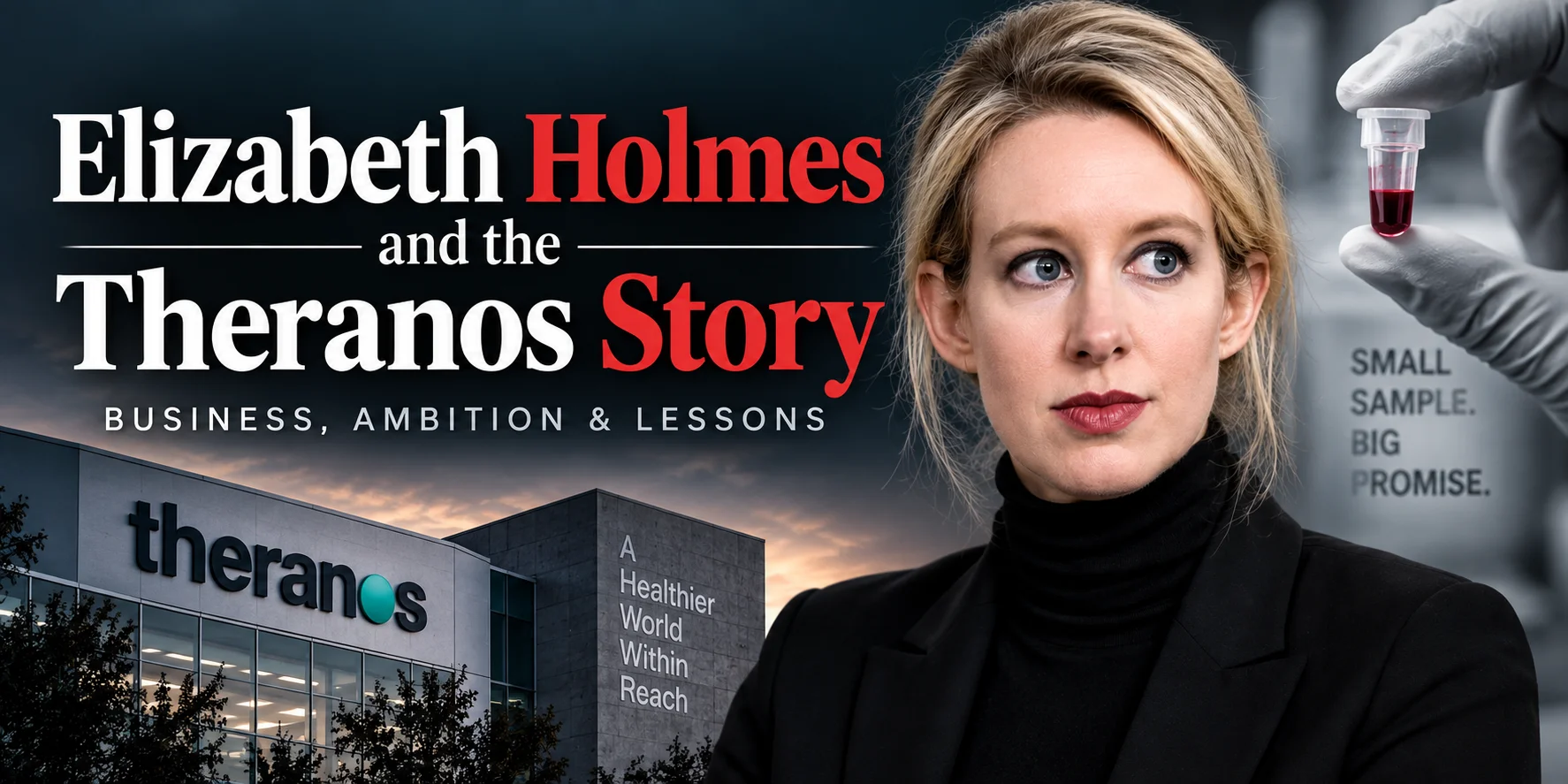
It was 2013. Elizabeth Holmes walked into a room wearing a black turtleneck and yeah, the turtleneck was intentional, she’d basically copied Steve Jobs’ whole look speaking in this measured, almost hypnotic voice. She told investors she’d figured out blood testing. Not improved it. Solved it. Like the problem was done.
And they believed her. Not just believed her either. They threw half a billion dollars at her company. Maybe more. These were supposed to be smart people venture capitalists, billionaires, people who’d backed Google. They just… gave her the money.
Fast forward to 2018. Theranos is gone. Completely gone. The technology never worked. The company had lied to literally everyone investors, partners, patients, the FDA. Elizabeth Holmes went from being on magazine covers as “the world’s youngest self-made billionaire” to a convicted felon who’s now in prison. This isn’t really a story about one person messing up. It’s about how the entire system let her get away with it for so long that when it finally fell apart, a lot of people got hurt.
Who Is Elizabeth Holmes?
Okay so Elizabeth Holmes. Born 1984 in Washington D.C. Her dad World Bank. Her mom had like, political connections, media people in her circle. She grew up around power. Not like, scrappy, had-to-fight-for-it power. Like, born-into-the-room power. Different thing entirely. And that wasn’t enough for her. Like, seriously. She wanted to be transformative. Not just successful. Transformative. She wanted to be Steve Jobs. Before thirty.
Which like, that ambition isn’t inherently bad, right? That’s actually what you need for real innovation. The problem is when you start caring more about looking like an innovator than actually, you know, innovating. When the image becomes the product.
She had this thing though. Like, this presence. When she’d talk about blood testing, it was like you were an idiot if you didn’t get it. Investors would go in skeptical and come out completely convinced. Journalists wrote these profiles that were just… fawning. Employees would get inspired, even when everything behind the scenes was clearly broken. Honestly? It was kind of scary how good she was at it. Like, unsettling. That’s the word.
Elizabeth Holmes’ Early Life and Education
Stanford. Sixteen, seventeen, somewhere around there. She started Theranos when she was nineteen and just… dropped out. Which okay, this is where that whole mythical dropout thing comes in. Bill Gates, Steve Jobs, blah blah blah. In tech you drop out and it means you’re like, too smart for school. Too visionary. Your brain is just too big for a classroom.
But like and this is the part nobody wants to talk about she didn’t drop out because she’d figured out some breakthrough technology she needed to pursue. She dropped out because she wanted to start a company. That’s different. The technology came after. She was like, “I want to be an entrepreneur,” not “I have this incredible insight I need to work on.”
Before all this, she’d worked at some military contractor and picked up some knowledge about microfluidic chips. Which are basically these tiny devices that can handle really small amounts of liquid. Except like, she didn’t invent that. People were already researching microfluidics. She just thought and this is the key moment what if we use this for blood testing?
Like imagine. You just prick your finger. Tiny amount of blood. And run hundreds of tests. Instead of sticking people with needles and waiting a week. That would actually be incredible if it was real. But she didn’t have it. Like, didn’t have it at all. Not even a crappy prototype that partially worked. Nothing. She just had the idea. And then she started asking people for money.
How Elizabeth Holmes Started Theranos
She founded this company. Called it Real-Time Cures at first. Then later changed it to Theranos mashing therapy and diagnosis together. The name is kind of whatever, honestly. Not the important part. The first money she raised? It was from people who knew her family. Not some random VC who didn’t know her. People who knew Elizabeth, liked her, believed in her as a person. And this matters because they weren’t really betting on the technology. They were betting on her. On Elizabeth as a person. Different thing.
She moved to Palo Alto. Started hiring. And then she started this pitch. This pitch about blood testing. She’d give it to investors, to pharmacy chains, to whoever would listen. And the pitch was actually… kind of genius? No big needles sticking people. No waiting a week for results. No need for those massive room-sized machines that cost like a hundred thousand dollars. Just this small device. Finger prick. Blood comes out. Tests happen. Boom. Cheaper. Faster. Better.
Except and this is the important part she didn’t actually have this. Not even close. The Edison machine, which became like her whole thing, her signature device? It couldn’t do what she was saying. It couldn’t do it. Wasn’t even close to being able to do it. But when she described it in meetings? When she talked about it? She described it like it already existed. She’d be sitting across from investors talking about specific test results. Accuracy rates. How the technology worked. All with this like, absolute certainty.
And people just… believed her. Which honestly? Is the wild part. VCs hear “what ifs” and “maybes” all the time. They’re used to it. But Holmes wasn’t selling a maybe. She was selling a thing that was done. A thing that worked. That she’d figured it out. Except she hadn’t. At all. There was no prototype. There was no working device. There was nothing.
But she said it with such certainty. And she had credentials. She had this vision that sounded real. And other investors were apparently betting on it, which meant it must be real, right? So people just accepted it. Nobody asked to see it working. Nobody demanded proof. They just believed her.
The Rise of Theranos
So by like 2010, 2011, things get crazy. The money starts pouring in from serious people. Rupert Murdoch. $125 million. Just gave it to her. The Walton family Walmart money they’re investing. VCs who backed Google, Facebook, all these huge companies, they’re now backing Elizabeth Holmes.
The valuation starts climbing. Just keeps going up. By 2013 she’s 28 and Forbes is calling her the world’s youngest self-made female billionaire. $4.5 billion. Like, that number doesn’t even make sense. She’s on magazine covers constantly. “The next Steve Jobs.” Magazine after magazine. “The most innovative woman in America.” TED talks. She’s everywhere. Literally inescapable.
The company opens this lab in Newark, Delaware. And then this is the crazy part they partner with Walgreens. Like, nationwide Walgreens. And they start putting these testing kiosks in Walgreens locations. Hundreds of them. Across the country. And people use them. Real people. Actual patients. They go to their local Walgreens, prick their finger, get blood tests. For real. On technology that doesn’t actually work the way Holmes is telling everyone it works.
The company’s got like 800 employees at this point. And the Board of Directors this is actually wild it’s Henry Kissinger. James Mattis. George Shultz. Like, actual serious Washington power people. Military people. Political people. But like, none of them I mean, I’m pretty confident none of them actually understood blood testing. They didn’t understand diagnostics. They understood Elizabeth. They liked her story. They thought the healthcare system was broken, which it probably is, and she seemed like someone who might fix it. That was basically the whole analysis.
Elizabeth Holmes as a Business Leader
So inside the company. Inside the walls of Theranos. It was weird. Like, really weird. Employees talk about it like she ran the place as like, part military base, part startup. I mean, the secrecy levels were insane. Like, so much compartmentalization that people working on different parts of the same product didn’t even know what the other team was doing. You work on the Edison machine? You don’t talk to chemistry. Different floors. Different access codes. Different everything.
Someone asked a question? Didn’t get promoted. Someone pointed out that something wasn’t working? They got pushed out or marginalized. She basically created this environment where you either believed in Elizabeth completely or you were kind of useless to her. She also surrounded herself with military and intelligence people. Which is weird for a biotech company, right? Not like, actual biotech people who’d built diagnostic equipment. Just like, people with military and intelligence backgrounds. People who were good at following orders, presumably. People who understood secrecy.
And her own image? She was like, obsessed with controlling it. How she dressed. How she talked. Who she spent time with. Everything was calculated. That turtleneck wasn’t some cute coincidence. She studied Steve Jobs. Like, actually studied him. Tried to copy his whole thing. The voice she did? That low voice? She practiced that. It wasn’t her natural voice. Her entire public thing was designed like a product. Like she was launching a version of Elizabeth Holmes into the world. Some employees found this inspiring. Honestly, some probably did. Others found it suffocating. Claustrophobic.
But the real thing the thing that mattered was that she created this situation where nobody in the company could actually talk to each other. Where people inside knew the technology was seriously broken. Seriously, seriously broken. But the outside world, the investors, the partners, they were getting told something completely different. She literally had two versions of reality happening at the same time. One inside the company. One outside. And she was the only one who knew both.
What Went Wrong at Theranos?
Okay so this is where it gets dark. Actually dark. The company didn’t like, explode suddenly. It wasn’t one thing that broke. It was that the entire company was built on lies. On claiming something existed that didn’t exist. And eventually, you just run out of ways to hide that.
The Edison. This machine that was supposed to run hundreds of different blood tests. Hundreds. From a tiny finger prick. You know what it could actually do? Like a handful of tests. Maybe. And not even reliably. Like, if you ran the same sample twice you might get two different results. That’s bad. That’s really bad actually.
And for most of the other tests? They weren’t using the Edison at all. They had machines from other companies. Siemens made this diagnostic equipment and Theranos had it. They’d run the blood samples on Siemens machines. Then they’d just… tell everyone the results came from their proprietary technology. From the Edison. From their revolutionary breakthrough device. Except it was a lie. It was Siemens doing it.
And patients were getting wrong results. Like, people getting told they had cancer when they didn’t. People getting told they had blood clots. False positives for serious stuff. And false negatives too, where people actually did have something but got told they didn’t, so they never got treated. The company knew. Or like, enough people in the company knew that it was happening and they just… kept going. Kept running tests. Kept lying.
When Walgreens would be like “Hey, is this actually validated? Does this actually work?” Holmes would just tell them what they wanted to hear. Smooth it over. When regulators would ask for proof, for data showing the tests worked, the company would either hand over incomplete stuff or just figure out ways to not fully answer.
She was playing with people’s health. Like, actual health. That’s not theoretical. Someone thinks they have a blood clot and goes to the ER because of a false positive, that’s real. Someone doesn’t get treated for something they actually have because of a false negative, that affects their life. And the whole structure of the company the confidentiality agreements, the compartmentalization, the loyalty demands all of that was designed to keep anyone from knowing and talking about it.
Then 2015. Wall Street Journal. Reporter named John Carreyrou. He started asking questions. He’d talked to people who used to work there. People who knew things. And he started asking questions that you literally cannot answer by just sounding confident and telling a good story.
The Theranos Controversy Explained
October 2015. The Journal publishes this massive story. Says Theranos’ blood-testing devices aren’t doing what they claim. Quotes ex-employees. Gets specific about how the Edison doesn’t work. Holmes’ response is just… denial. She attacks Carreyrou. Questions his sources. She was actually good at this part making it seem like anyone who disagreed with her just didn’t understand her vision. Or was jealous. Or threatened by her success.
But the denials don’t work this time. Because suddenly other journalists start digging. Congress gets interested. The FDA starts paying attention. And CMS the government people who regulate medical labs they send an inspector to Theranos. And the inspector finds… a lot of problems. Serious stuff. How they’re running tests. How they’re storing equipment. How they’re reporting results. Not like, “this could be improved” stuff. Like, actual safety problems.
January 2016. Theranos voids two years of test results. Just like, “sorry, these might not be accurate.” Millions of tests. Two years. Then they shut down the lab basically. By 2018 Theranos is just gone. The thing that actually matters though the thing that was important about this failure it wasn’t just that another startup died. That happens constantly. What mattered is what it showed about the system. How completely broken it actually is.
Holmes walked into rooms. Told a compelling story. Got hundreds of millions of dollars from investors based on vision, not proof. And nobody and I mean nobody stopped her. VCs did basically zero real checking. Board members with these impressive names didn’t actually push her to prove anything was real. Regulators took literal years to catch on. Journalists mostly just believed the narrative. It took one reporter actually asking questions for anything to happen.
Elizabeth Holmes’ Legal Case and Conviction
Federal prosecutors look at this in 2015. Takes a while though. By June 2018 they charge Holmes and Sonny Balwani her business partner, president guy with wire fraud. And conspiracy. Big charges. The trial is 2021. Prosecutors have emails. They have testimony from people who worked there. Documents showing she made false claims. About the technology. About what the company could do. About revenue. About whether any of this was actually validated. Like, they had a lot of evidence. A lot.
Her defense is… something. She basically says she believed in the vision. She wasn’t trying to deliberately deceive people. She was just operating in a complicated space where you have to make predictions that might not work out. Like, I believed it would work, so I talked about it like it would work. That’s different from fraud, right? Except the jury just… doesn’t believe that. January 2022. Guilty. Four counts of wire fraud.
November 2022. Sentenced to 11 years in prison. That’s like, a real amount of time. She’s appealing it. But she’s in prison right now. Actually serving time. Balwani gets tried separately and convicted on basically everything. July 2022.
Business Lessons From the Theranos Story
So what do you actually get out of this? Besides “don’t commit fraud” which is obvious.
Vision without proof is just a good story.
Holmes could tell stories. Like, really well. But that’s not innovation. That’s marketing. Real innovation needs something that actually works. Even if it’s rough, even if it’s not perfect, it needs to exist. Theranos had nothing. It had a story and that was it.
Why does this matter? Because we’ve built tech culture around the narrative. The founder who believes so hard they can basically will their product into existence. Sometimes that works out. Sometimes it doesn’t. And when it doesn’t work out but you’ve already raised half a billion dollars because people believed the story? That’s jail. That’s a serious problem.
If you need extreme secrecy to run your company, something is broken.
Good companies have people talking to each other. Communicating. Knowing what’s happening. When you need such intense compartmentalization that different teams literally can’t talk to each other, when you’re telling completely different stories to different people about what your company actually does that’s not you protecting some genius innovation. That’s you hiding something. If your entire business depends on nobody talking to anybody and nobody knowing the truth? You’re not building something. You’re hiding something.
Get real experts on your team, not just impressive names.
Theranos’ board was full of serious political and military people. Legitimate power figures. But none of them understood blood testing. None of them understood diagnostics. They couldn’t evaluate whether any of the claims were even possible. They were just betting on Elizabeth Holmes as a person. If you’re building something technical, you need actual technical experts. People who can look at what you’re doing and say “this won’t work” or “this is possible but it’ll take way longer.” Not people who are just impressed by your pitch.
Listen to your employees when they’re worried.
At Theranos, people who had concerns got pushed out. Or ignored. If multiple people inside your company are worried about the same problem, that’s important. That’s data. That’s a warning sign. Ignoring it doesn’t make it go away. It just means you’re choosing not to know.
What Entrepreneurs Can Learn From Elizabeth Holmes
This isn’t about fraud. I mean, it is, but it’s not just that. It’s about how ambition can get so disconnected from reality that you literally don’t notice it happening anymore.
Are you solving a real problem or are you in love with your solution?
Holmes started backwards. She had the solution blood testing on this tiny device. Then she looked for problems to fit the solution. That’s the wrong way. You should start with an actual problem. Something real that people actually have. Then figure out if you can solve it. Not the other way around. Not solution first, problem later.
Actually show people your work before you ask for their money. If you have something that works even if it’s messy and incomplete show it to people who’ll be honest with you. Not investors yet. Not your clients yet. People who will actually look at what you’re building and tell you the truth. Not just people impressed by how confident you sound.
Your belief in the mission is separate from the reality of your product right now. Holmes might have actually believed Theranos would revolutionize healthcare eventually. That might have been genuine. But her technology right now didn’t work the way she was telling people it worked. Those are two completely different things. You can have real faith in where you’re trying to go and still be honest about where you actually are right now.
How you treat people who disagree with you matters a lot. If you find yourself firing or pushing out people because they’re asking hard questions, that’s not a sign they don’t get your vision. That’s a sign you need to stop and actually listen to them.
The complicated part is that some of the people criticizing Holmes might not have believed in her vision anyway. Some investors who lost money might have been okay taking that risk. The issue wasn’t that the product didn’t work the way she hoped. The issue was that she lied about it. And kept lying. For years.
Elizabeth Holmes’ Impact on the Business World
Theranos changed how we think about startup culture. Or maybe it just exposed something that was already broken. Before this happened, the narrative was simple. Believe in yourself. Have a vision. Move fast and break things. The whole idea was that the biggest obstacle to innovation was people being too cautious. Not believing in themselves enough. Playing it too safe.
Theranos showed that sometimes the problem is the opposite. Sometimes the person who believes the hardest is the most disconnected from reality. Sometimes “move fast and break things” means you break laws. You hurt people. Sometimes it’s just code for “we’re not actually checking if this works.”
It also showed how weak our systems actually are. Venture capitalists basically did zero real checking on the core technology. She’d make a pitch, answer questions confidently, and they’d give her money. Regulators took years to catch on. Board of directors had all these legendary names but none of them understood blood testing so none of them could actually evaluate whether it was real. It’s easy to move fast when nobody with actual expertise is asking questions.
Holmes is this weird figure now. Not a tech legend who failed and built something bigger. Just someone who got convicted of fraud. Someone in prison. Someone who did actual damage to actual people who got wrong medical test results because they believed the story she was selling.
But the company being gone doesn’t mean anyone learned anything. There are still people operating exactly like Holmes did. Talking about products that don’t exist yet like they already do. Keeping information compartmentalized so nobody knows what’s actually happening. Charismatic enough that people just believe them. The lesson is there. You just have to be looking for it.
FAQs
Who is Elizabeth Holmes?
She founded Theranos. Convinced hundreds of millions of dollars in investor money that she’d figured out revolutionary blood testing. Except she hadn’t. Got convicted of lying about it in 2022. Now doing 11 years in federal prison for wire fraud. Basically the biggest startup fraud case in recent memory.
What was Theranos?
Health tech company. Claimed they’d invented this device called the Edison. Could run blood tests on a tiny finger prick of blood. Like, imagine how cool that would be if it was real? No needles. Results in minutes instead of days. Cheaper. Except the device didn’t work. It was like… vaporware that people were actually using for real medical tests. Shut down in 2018 when people figured out it was all lies.
How did Elizabeth Holmes start Theranos?
Dropped out of Stanford when she was nineteen. Started the company in 2003, called it Real-Time Cures originally. Raised money from people who knew her family. People who believed in her as a person, not because she had a working device or anything. She had nothing. Just talked confidently about what she was going to build and people gave her money. Then it just spiraled.
Why did Theranos become controversial?
Because the technology didn’t work and they knew it. The Edison couldn’t do what Holmes claimed. Most of the tests weren’t even running on the Edison — they were using other companies’ equipment and just lying about it. Patients got wrong results. People thinking they had cancer when they didn’t. People not getting treated for diseases they actually had. And the company just kept going like nothing was wrong.
What happened to Elizabeth Holmes?
Indicted in 2018. Trial in 2021. Convicted January 2022. Sentenced to 11 years in prison in November 2022. She’s appealing it but she’s in prison right now. Her business partner Sonny Balwani also got convicted on basically everything.
What business lessons can be learned from the Theranos story?
Don’t talk about products like they exist when they don’t. Listen to people inside your company who are worried about something. Have actual experts on your board who can evaluate if your claims are even possible. Don’t compartmentalize so much that you’re running two different versions of reality. And like, don’t lie for five years and think you’re going to get away with it just because you’re charming and confident.
Why is Elizabeth Holmes well known in the business world?
She got famous as the youngest self-made billionaire and “the next Steve Jobs.” Then she got famous as the person who proved that confidence and charisma can substitute for an actual working product for way longer than it should. She basically showed how easy it is to fool VCs, how bad board oversight is, and how far a really compelling story can take you before reality catches up.
So here’s the thing about all of this. Everyone wants to tell the story like it’s about Elizabeth Holmes being evil. Or crazy. Or delusional. And like, she definitely made choices to lie. She’s in prison for it. That’s real.
But here’s what should actually worry you. The entire system let her do it. For years. The VCs didn’t ask the right questions. The board members didn’t understand the technology so they couldn’t actually evaluate anything. Regulators took like, years to figure it out. Walgreens didn’t demand proof before they put these machines in hundreds of locations.
That part should scare you more than just “one person was a liar.” Because there are always going to be ambitious people willing to exaggerate or just straight-up lie. That’s constant. The real question is whether the systems around them make it easy or hard to pull it off.
Right now? It’s still pretty easy. Like, really easy.