


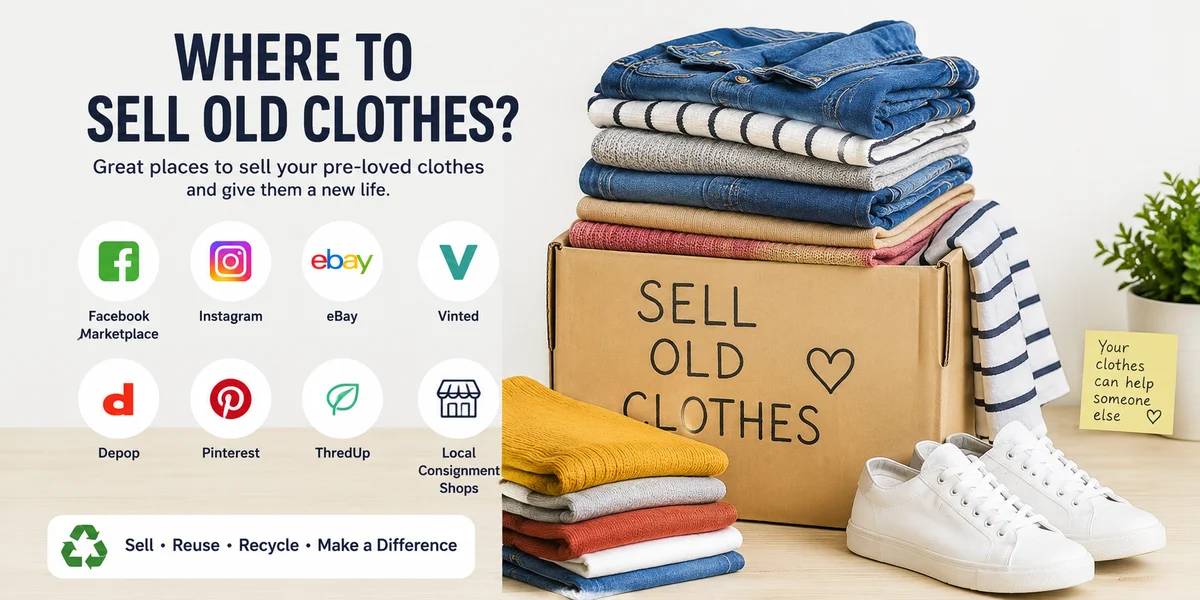
My closet hit a breaking point back in March. Nothing dramatic — no big “living minimally” moment, no inspirational reel talking me into it. I just couldn’t shut the drawer anymore — I mean that literally, I had to lean on it to get it closed. There was a t-shirt jammed in the back I hadn’t worn since a Halloween party in 2021, and I genuinely could not tell you why I’d kept it that long. Wasn’t even a good costume, if that matters.
Anyway. I filled three trash bags with clothes, drove them to a little resale shop about fifteen minutes from my apartment, circled the block twice because parking there is genuinely cursed, and finally sat in a plastic chair for almost two hours while a guy in the back sorted through everything like he was defusing something. When he finally came out — and I mean finally, I’d read every flyer taped to the register at least twice by then — he barely looked up. “We’ve already got, like, twenty of these exact shirts,” he said, holding up one of my Old Navy tees like it had personally wronged him.
Final offer: nine dollars and forty cents. Cash. For three full bags.
I stood there doing math on gas money and felt a little ridiculous.
That day taught me something I wish someone had told me years earlier: where you sell your clothes matters way more than how nice the clothes actually are. Some places are genuinely built to pay you. Others are built to make you feel okay about donating for free while calling it a “sale.” Big difference.
Here’s everything I’ve picked up since about the best places to sell used clothes — which apps actually work, which ones don’t, and one annoying tax thing almost nobody mentions.
Figure Out What You’ve Actually Got Before You Sell Anything
Not every piece of clothing deserves the same amount of effort. This sounds obvious, but I skipped this step for years, and it cost me — mostly in wasted shipping labels and listings nobody ever clicked on.
Before you sell old clothes anywhere, sort everything into four rough piles:
- Barely worn or still has tags. Worn less than five times, no visible wear. Worth photographing properly and listing on its own.
- Good condition basics. Worn a season or two, no stains, nothing fancy but nothing garbage either — your Old Navy, Target, H&M category.
- Actual designer or recognizable names. Coach, Levi’s, The North Face, anything people specifically search for by name.
- Rough shape. Stains, stretched out, missing buttons, pilling. Be honest here. Nobody’s buying your gym shirt with the bleach spot on the collar, no matter how “vintage” you’ve convinced yourself it looks.
That last pile isn’t worth your time selling. Donate it, recycle the fabric, or turn it into a garage rag. I know that stings a little if you paid real money for it once. But holding onto a stained shirt for six months hoping someone wants it is its own kind of cost — it’s just paid in closet space instead of dollars.
Once you know which pile something belongs to, the “where” question gets a lot easier.
Best Places to Sell Clothes Online When You Want Real Cash
Let’s talk numbers, because that’s really what everyone wants to know: how much do you actually walk away with?
Poshmark
Poshmark’s been around long enough that most people already have the app, which genuinely helps — there’s already an audience there scrolling. It’s known for its “sharing” culture: sellers post their listings into shared feeds constantly to stay visible, and that hustle works if you keep it up.
The fee structure is simple, at least for now: a flat $2.95 on anything you sell for under $15, and 20% on anything $15 or above. So a $40 jacket nets you $32. Fun fact — Poshmark actually tried messing with this setup a while back, shifting part of the cost onto buyers instead, and sellers hated it enough that they reverted to the original structure within about a year. Either way, there’s no listing fee and no separate payment processing charge — the commission covers everything, shipping label included.
It’s one of the better options out there for casual sellers, women’s clothing especially, since that’s where most of the traffic sits. Men’s and kids’ categories move slower. Just being honest.
Depop
Here’s a plot twist most “sell your clothes online” articles from a couple years ago would get wrong: Depop used to charge a flat 10% fee, same as everyone else. Then it just… stopped. Sellers in the US now pay $0 in Depop selling fees — you’re really only covering payment processing, which comes out to around 3.3% plus 45 cents per sale. That’s a real difference from most of the apps on this list.
Depop still skews younger and trendier — think Y2K, streetwear, thrifted-core. If your old clothes look like something out of a “get ready with me” video, this is your spot. There’s also an optional “Boosted Listings” feature that adds a 12% fee if you use it and the item sells, so read the fine print before you tap that button.
I actually think Depop’s a little overrated if what you’re selling is just plain, basic stuff — jeans, work tops, nothing distinct. You’ll get more eyes on Poshmark for that. Save Depop for the pieces with actual personality.
Mercari
Mercari’s more of a general marketplace — clothes, sure, but also electronics, home goods, basically anything. Less of a fashion-specific crowd, but also less competition clogging up search for plain basics.
Mercari charges a flat 10% selling fee. They actually tried eliminating seller fees entirely for a stretch, shifting the cost to buyers instead, but reversed course after both sides pushed back. So it’s flat 10% again, which puts it right in the middle of the pack: cheaper than Poshmark, pricier than Depop.
Vinted
Vinted’s the new name on this list, at least in the US. It’s been enormous in Europe for years and only really opened up here in a big way back in January, with an official launch event and everything. The thing that makes it worth mentioning: sellers keep 100% of the listed price. Vinted charges the buyer a small “Buyer Protection” fee instead — roughly 5% plus 70 cents — which quietly moves the cost without touching what you take home.
If you’re deciding between Vinted and Poshmark for the exact same item, Vinted wins on take-home pay, no contest. But the US buyer pool is still thin since it’s so new here, so things can sit unsold longer. Worth listing on both and seeing which one bites first.
eBay
Old reliable. eBay’s less about clothes specifically and more about clothes with a story — vintage band tees, discontinued sneakers, a jacket from a brand that doesn’t even exist anymore. You can still run an auction if you want the drama, or just set a fixed price and walk away.
Fees run around 13% of the total sale, shipping included, for most clothing categories. Not the cheapest option here. But for anything remotely collectible, eBay’s search traffic beats almost everyone else on this list.
Try this before you list a single thing: put the item near a window in the late morning, shoot it straight-on instead of from above, and take one photo of any flaw up close instead of cropping around it. Buyers trust listings more when they can see the tiny stain instead of it being hidden — and you’ll get fewer messages later asking if it’s really true to size, which saves you time.
One more thing that trips people up: price based on what similar items have actually sold for, not what they’re currently listed for. Every one of these apps lets you filter results by “sold” instead of “active” — Poshmark and eBay make it especially easy. Half the listings sitting active for six months are priced way too high, and copying that number just means your item sits for six months too.
My friend Dani spent one Saturday photographing about 40 pieces of old workout gear — leggings, sports bras, the usual — and listed everything on Poshmark that same night. She priced things low on purpose, somewhere around a third of what she’d paid, and hit “share to followers” every single morning for about six weeks straight. Total from that one closet clean-out: roughly $490 after Poshmark’s cut, off about $610 in sales. Not life-changing money. But it covered her flight home for Thanksgiving, and she said it took way less effort than she expected once the photo routine clicked.
Compare that to my sister, who tried ThredUp instead. You order a Clean Out Kit, stuff it with clothes, mail it back for free. She sent eleven pieces of barely-worn maternity clothes. ThredUp accepted six. After the standard $14.99 processing fee came out of her earnings, her total payout was a little over $19. To be fair, that fee only gets taken out of what actually sells — if your stuff doesn’t earn enough to cover it, you’re not stuck paying out of pocket. Small mercy.
Honestly? I think ThredUp’s fine if the whole point is getting stuff out of your house with zero effort and you don’t care much about the money. If you actually want cash for your clothes, do the listing yourself. It just takes longer.
Got Actual Designer Stuff? Skip the Regular Apps
If what you’re sitting on is real designer — Chanel, Gucci, Burberry, even solid contemporary labels like Theory or Vince — treating it like a $12 Forever 21 top is basically leaving money on the table.
The RealReal and Vestiaire Collective both specialize in authenticated luxury resale, and they work a little differently from each other. The RealReal does everything for you: you ship the item in, their team authenticates it, photographs it, prices it, and lists it. Commission is tiered and can run anywhere from around 20% on lower-value pieces up to 70% or more on high-demand handbags and watches — the pricier the item, the better percentage you keep. Vestiaire Collective flips that arrangement a bit: you do your own photos and listing, but the commission generally runs lower, somewhere in the 12-25% range depending on price.
So it’s really a trade-off. The RealReal for zero effort and a smaller cut, Vestiaire if you don’t mind doing the work yourself and want to keep more of the sale.
Is it worth using either one instead of just listing on Poshmark? For a $30 blouse, probably not. For a barely-used designer coat or bag that could sell for $400 or more, yes — you get access to buyers who specifically shop there because they trust the authentication, and that trust is worth paying for.
If You’d Rather Just Get Cash Today
Not everyone wants to photograph, list, ship, and wait around for weeks. Some days you just want the clothes gone and a little cash in hand before you leave the parking lot. Fair.
Quick vocabulary note, since it trips people up: places like Buffalo Exchange and Plato’s Closet buy your clothes outright. You get paid that same day, whether the item ever actually resells or not. True consignment — like The RealReal, back in the last section — only pays you after the item sells, sometimes weeks later, which is part of why those percentages can look so much more generous. They’re taking on less risk upfront, so they can afford to hand over a bigger share once it sells.
Buffalo Exchange and similar buy-sell-trade shops (Crossroads Trading is basically the same model under a different name) work like this: you bring in a bag, someone sorts through it while you wait — usually twenty to forty minutes, depending how busy they are — and they offer you either cash or store credit on the spot. Store credit is almost always the better deal, typically around 50% of what they’ll resell the item for, versus roughly 30% for cash. They only take stuff that’s currently in style and in solid condition, so don’t show up with your whole closet expecting them to take all of it. They won’t, and that’s fine.
Plato’s Closet runs a nearly identical model but leans younger — think teens and young adults — and pays cash on the spot, typically somewhere around 25-35% of what they figure they can resell the item for. Call ahead if you’ve got a specific brand you’re hoping to offload; some locations stop buying certain categories for weeks at a time depending on what their racks already have too much of.
Local Facebook groups and Marketplace work well for stuff that’s harder to ship — bulky coats, shoes, anything you’d rather not deal with sizing complaints on. You lose the built-in audience of a dedicated app, but you also lose the fees. Meet up, take cash, done.
Clothing swaps aren’t technically selling, but they solve the same problem: too many clothes, not enough use out of them. A few friends, a Sunday afternoon, everyone brings what they don’t wear anymore. No money changes hands, but you walk away with new-to-you clothes instead of a garbage bag headed for the curb.
The Tax Thing Nobody Mentions About Selling Clothes Online
Here’s the part almost every “sell your old clothes” article skips entirely: if you’re making real, regular money doing this — not just clearing out a closet once, but running actual sales all year — the IRS eventually wants to know.
For a while there was a lot of confusion, and honestly a fair amount of panic, around a rule that would’ve required platforms to send you a 1099-K for any year you made over $600 total. That rule got walked all the way back. As things stand now, platforms only have to report your sales to the IRS once you cross $20,000 in payments AND 200 transactions in a single year — which covers basically nobody who’s just cleaning out a closet. A few states set their own lower thresholds regardless of the federal rule, though, so don’t be totally shocked if a form shows up even without crossing $20,000 — it happens more than people expect.
That said, here’s the honest answer underneath all of it: technically, profit from selling something for more than you originally paid is taxable, form or no form. Realistically, if you’re selling your own used clothes for less than you paid for them, which is nearly everyone doing this, you’re not generating taxable profit in the first place. It’s mainly side-hustle resellers buying stuff specifically to flip for more who need to think about this seriously. I’m not an accountant, so if you’re doing real volume, an actual five-minute conversation with one beats trusting a blog post. Mine included.
Quick Gut-Check If You’re Still Not Sure
When in doubt, run whatever you’re holding through this:
- Barely worn, trendy, casual brand? → Poshmark or Depop. Price it around 40-50% of what you paid.
- Real designer name, good condition? → The RealReal or Vestiaire Collective. Let them set the price — they know their buyers better than you do.
- Old but fine basics, no real brand recognition? → Bundle it and sell cheap and fast, or trade it in at Plato’s Closet for store credit.
- Stained, torn, or genuinely worn out? → Donate it or recycle the fabric. Skip the listing entirely.
- Need cash today and don’t want to ship anything? → Buffalo Exchange, Plato’s Closet, or a local Facebook group.
That’s basically the whole decision tree. It took me way too many wasted listings to figure out.
I still think about that nine dollars and forty cents sometimes. Not because it ruined my week or anything — it’s just such an easy mistake to avoid once you know better. You probably won’t get rich clearing out your closet, let’s be real. But you don’t have to leave that much money on the table just because you picked whatever place happened to be closest to your house.
Sell the stuff that’s worth selling. Donate the rest. And maybe finally get rid of that Halloween shirt.